
Last updated October 16, 2026
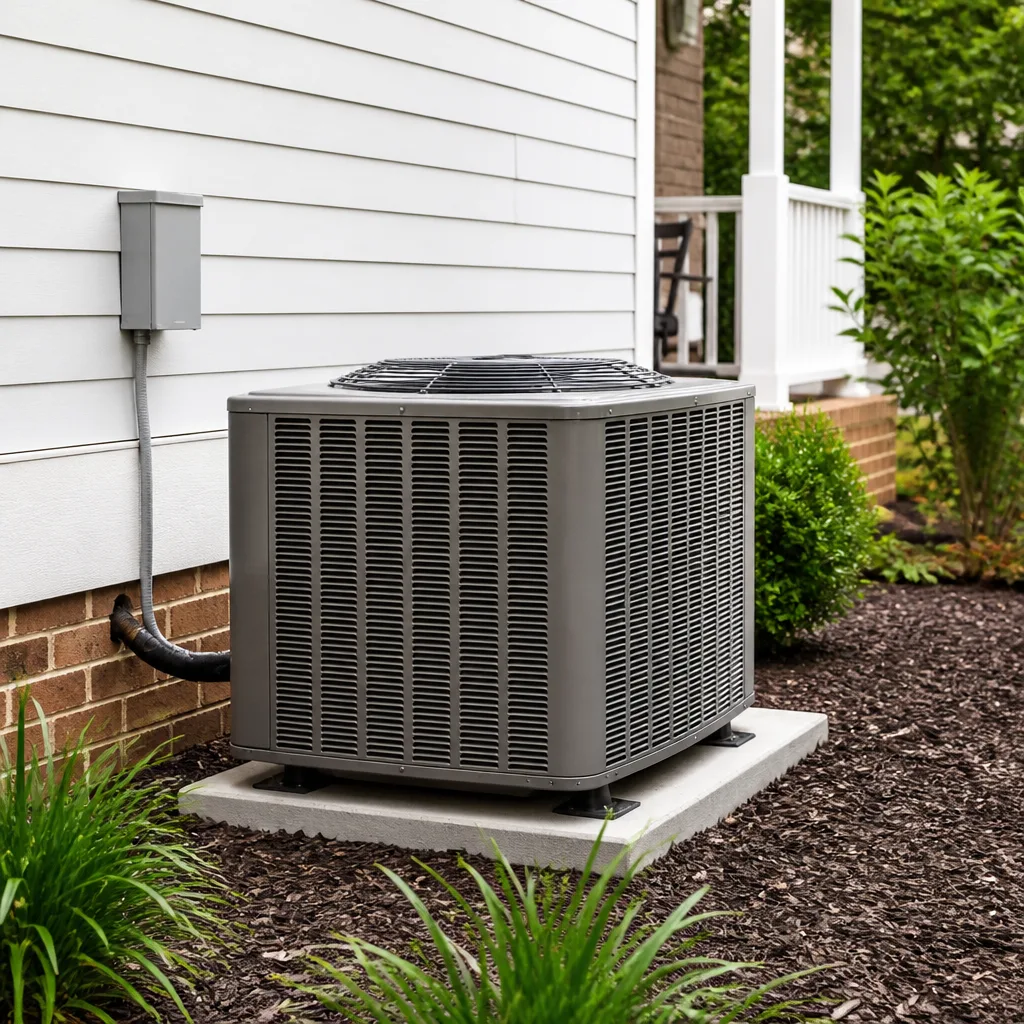 AC repair
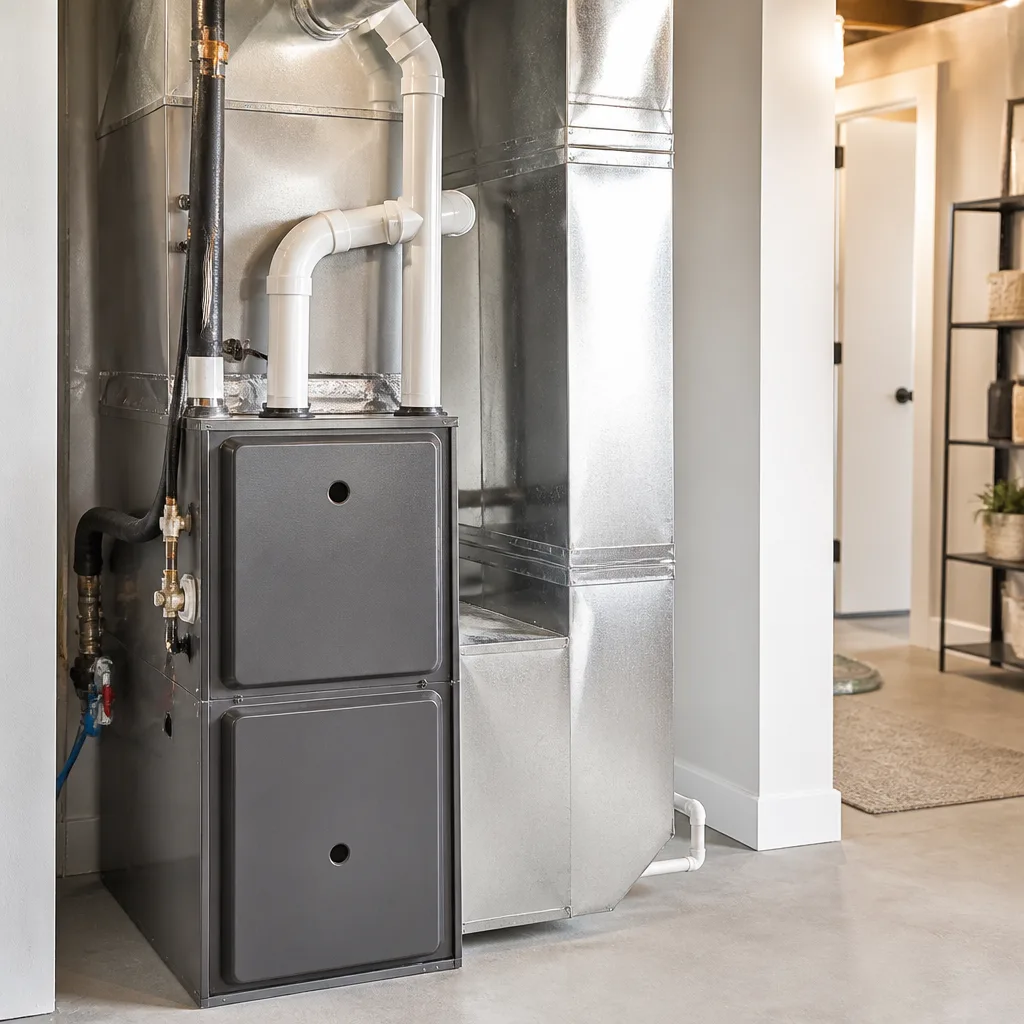 Furnace & heating
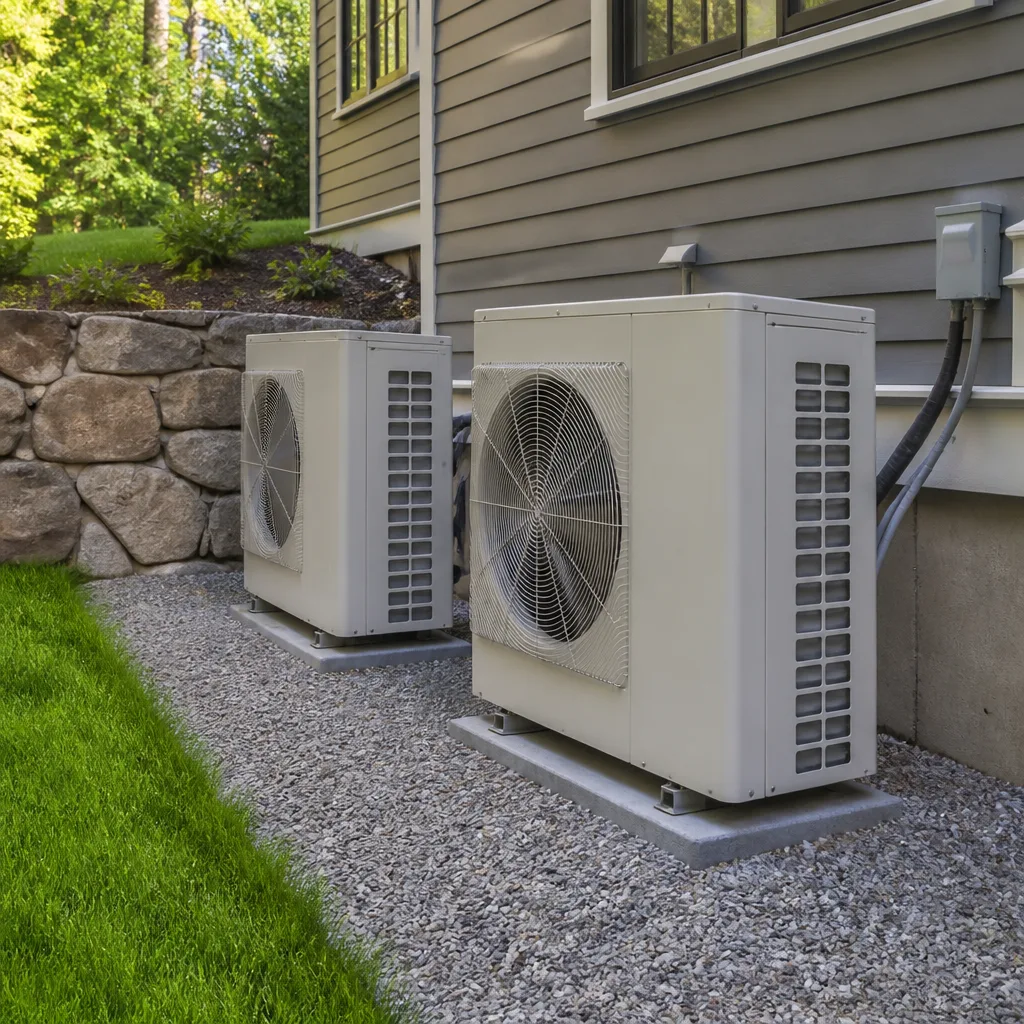 Heat pumps
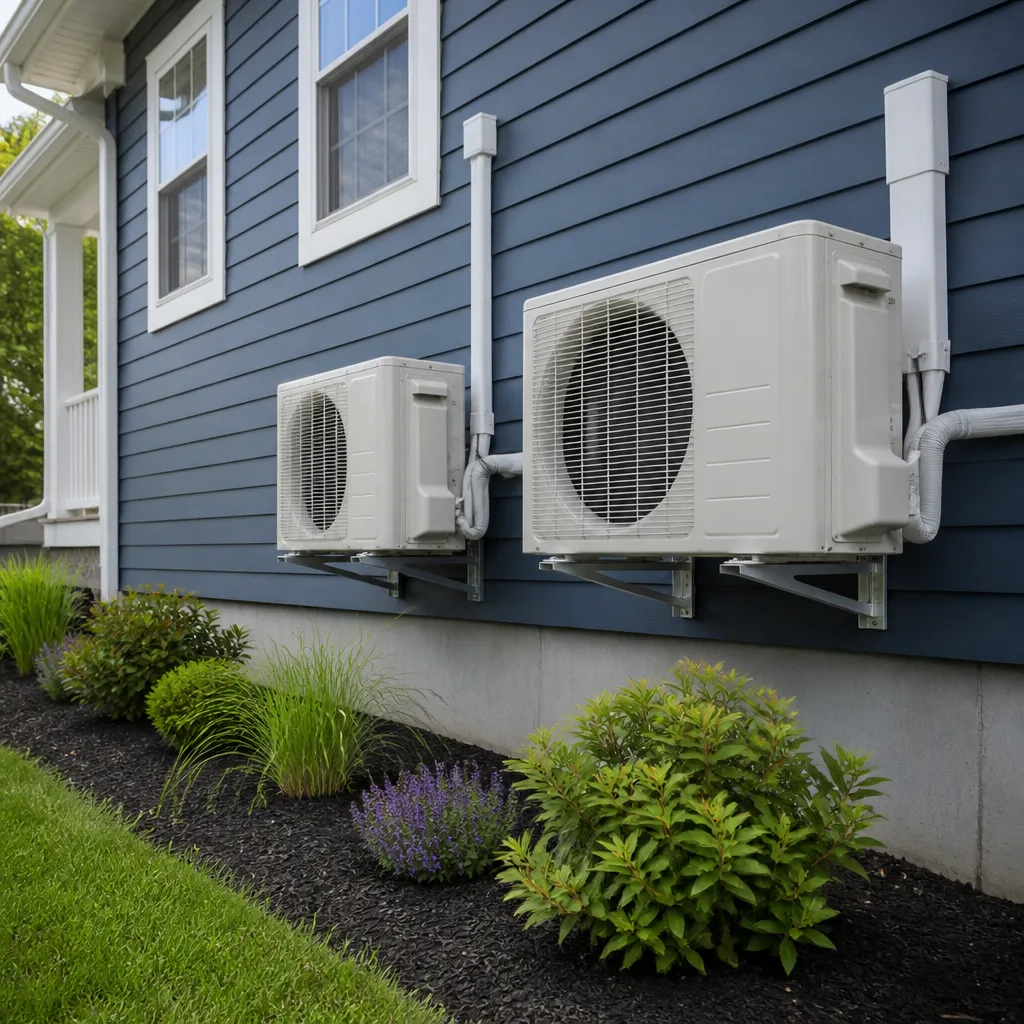 Ductless mini splits
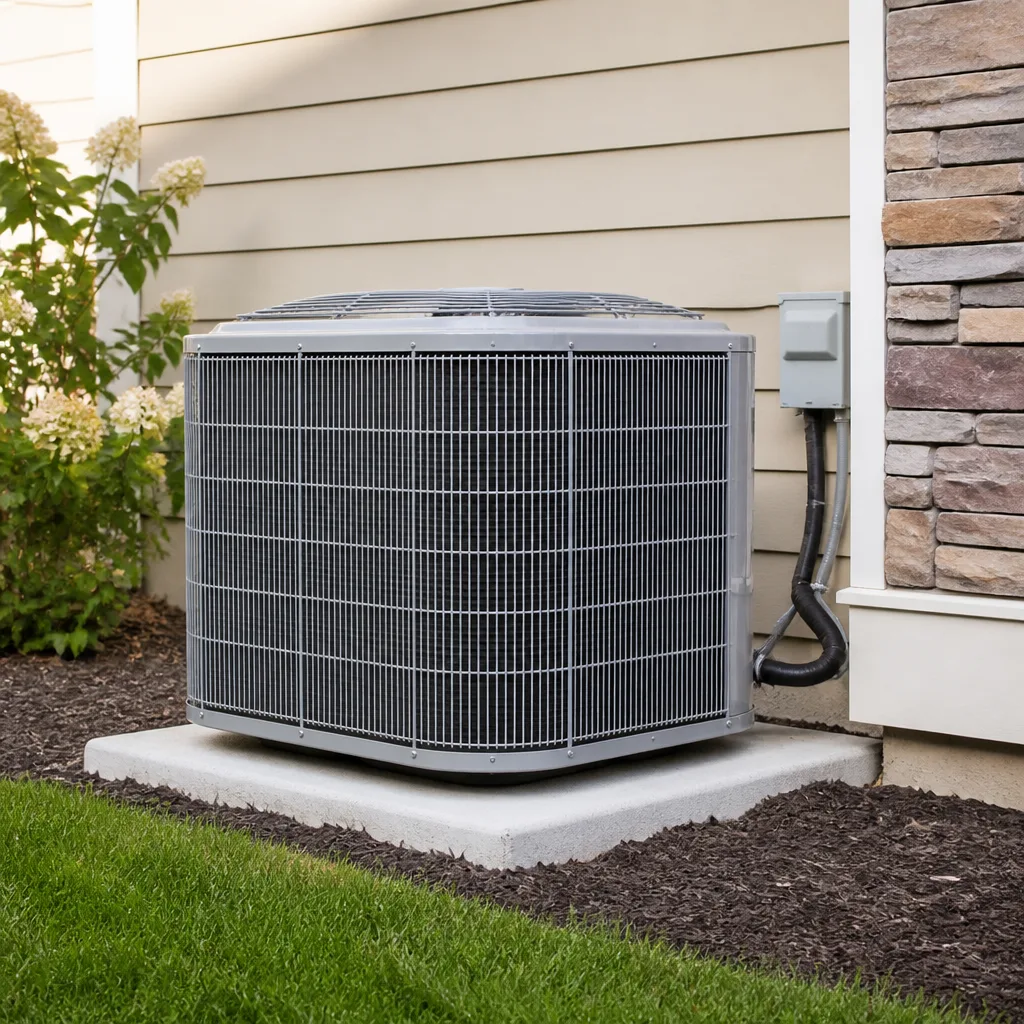 Carrier
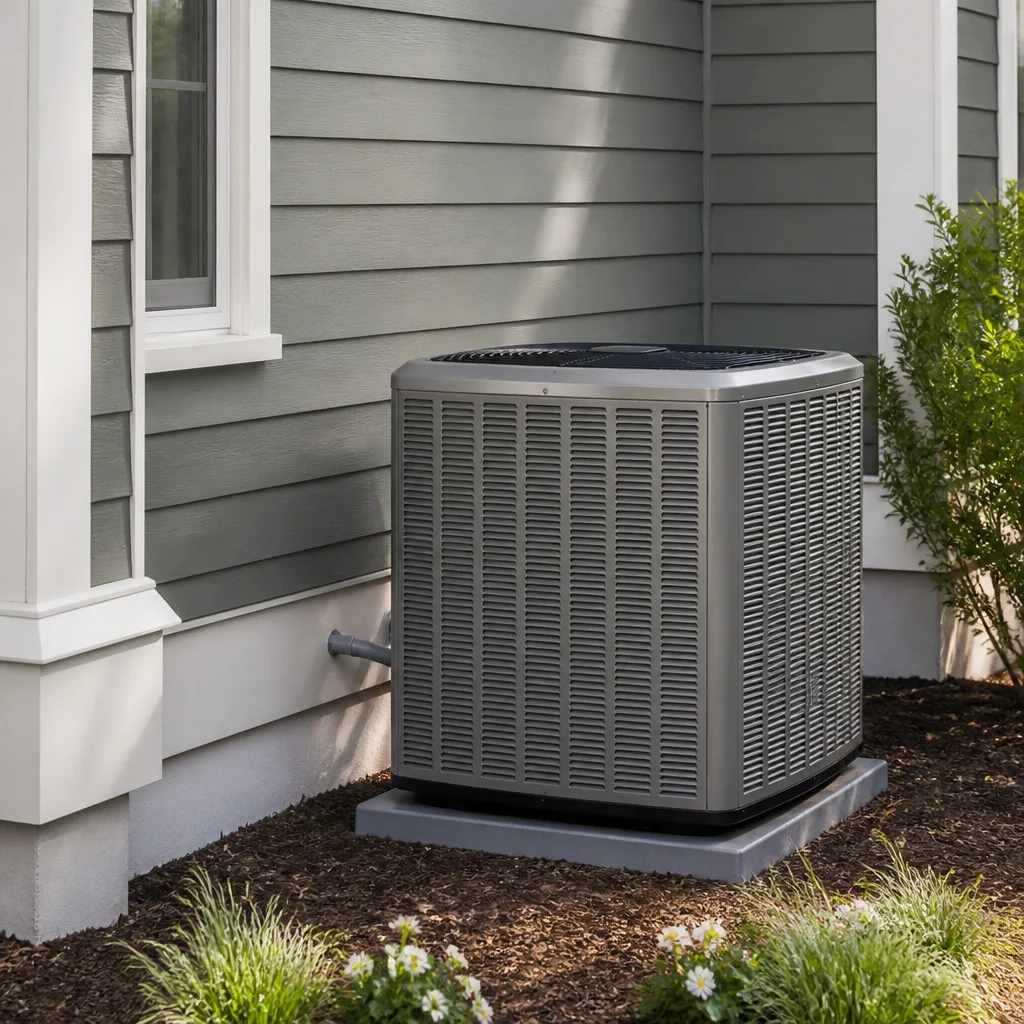 Trane
Trane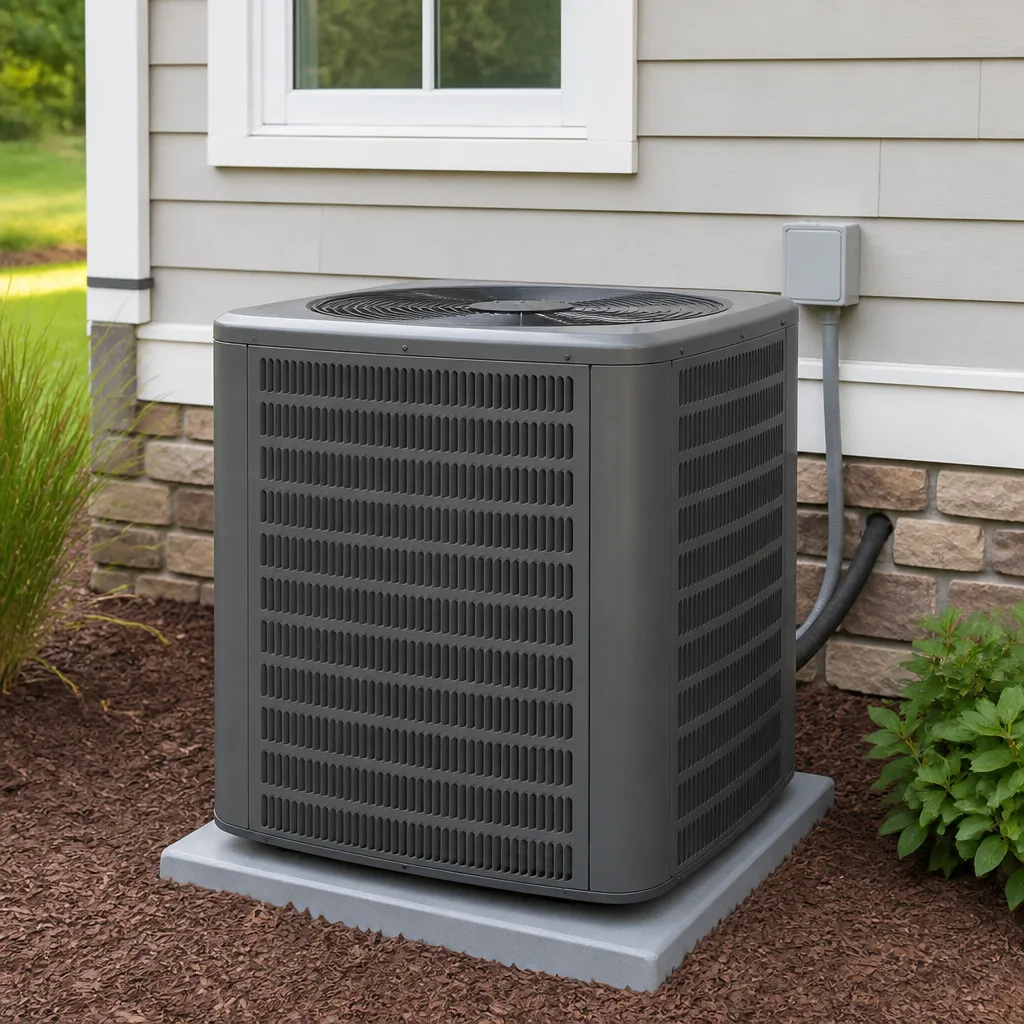 Goodman
Seasonal tune-up and full diagnostic on your Carrier, Trane, or Goodman system - readings shown to you before any repair is proposed
Diagnosis first, numbers second - you approve the repair price before a single part goes in.
Get your free estimateHVAC Permits, Codes & Inspections in CA: What You Need to Know
An unpermitted HVAC installation in California sits on your property like a live wire. It doesn’t spark until the worst possible moment: when you sell the house, when a fire claim lands on an adjuster’s desk, or when a home inspector flags it during escrow. In Long Beach, where housing stock ranges from 1920s bungalows in Rose Park to 1980s tract homes in El Dorado Park, we’ve watched homeowners absorb five-figure retroactive permitting costs because a previous owner saved $600 on permit fees twenty years ago. This guide decodes the two-layer system California uses to regulate HVAC work: the state’s Title 24 energy code and Long Beach’s local permitting and inspection process. For more guides & resources on keeping your system compliant, visit our blog. By the end, you’ll know exactly which jobs require a permit, what your contractor should be doing before work starts, and how to protect yourself if you inherited an unpermitted system.
Styles & brands we work with
Quick Answer
In Long Beach and throughout California, HVAC permits are required for any installation or replacement of a furnace, air conditioner, heat pump, or ductwork, plus any repair involving refrigerant line modification, and the work must also meet Title 24 energy standards with HERS verification. Expect to pay roughly $150 to $450 in Long Beach permit fees for a typical residential system changeout, with inspections scheduled after rough-in and again at final completion.
Table of Contents
- The Two-Layer System: Title 24 and Long Beach Codes
- Which HVAC Jobs Need a Permit in Long Beach (and Which Don’t)
- Title 24 in Plain Terms: What CF-1R and HERS Actually Mean
- The Long Beach Permit Process: Fees, Timeline, and Inspections
- Discovering Unpermitted HVAC Work: Your Options
- How to Verify Your Contractor Actually Pulled the Permit
- What Permitting Adds to Your Total Project Cost
- Common Mistakes to Avoid
- When to Call a Professional
- Frequently Asked Questions
- The Bottom Line
The Two-Layer System: Title 24 and Long Beach Codes
California regulates residential HVAC work through two overlapping layers, and most homeowners only ever hear about one of them. The first layer is the California Energy Code, commonly called Title 24, Part 6. It sets statewide minimum efficiency requirements for equipment and mandates specific testing procedures. The second layer is local enforcement: Long Beach Development Services issues permits, inspects the work, and verifies that the installation meets both the state energy code and the city’s mechanical code, which adopts the California Mechanical Code with local amendments for things like seismic strapping and coastal corrosion protection.
Here’s where the gap opens up: a contractor can install equipment that meets Title 24 minimums on paper but fails a Long Beach inspection because of a local requirement for condensate disposal or equipment clearances specific to the city’s older housing stock. In Belmont Heights, where many homes are on raised foundations, we regularly see installations where the return air path was never properly sealed because the original job was never inspected. These are exactly the kinds of issues covered in our HVAC Warning Signs: A Long Beach Homeowner’s Reference Guide. The permit process exists to catch exactly this kind of thing before it becomes your problem.
The two layers work together like this: Title 24 tells manufacturers and installers what minimum performance the equipment must hit. Long Beach’s building department tells installers how the equipment must be installed and verifies the job after the fact. Skip either layer and you’ve created a liability that follows the property, not the contractor who did the work.
Which HVAC Jobs Need a Permit in Long Beach (and Which Don’t)
The rule of thumb in Long Beach is straightforward: if the work involves refrigerant, gas lines, electrical circuits, or ductwork, it needs a permit. If it doesn’t, it doesn’t. Here’s the specific breakdown based on the California Mechanical Code and Long Beach’s permitting requirements.
Work That Requires a Permit in Long Beach
- New furnace or air handler installation – any gas-fired or electric unit being installed for the first time or as a replacement, including full furnace repair in Long Beach jobs that involve component replacement beyond a part swap
- New air conditioner or heat pump installation – including condenser replacement, heat pump installation in Long Beach, and any changeout of outdoor equipment
- Ductwork installation or modification – adding new runs, replacing more than a section of existing duct, or reconfiguring the supply and return layout
- Any refrigerant line work – replacing a lineset, moving the condenser location, or adding refrigerant circuits
- Electrical service changes for HVAC equipment – running a new circuit, upgrading the breaker panel, or installing a disconnect box
- Gas line modifications – extending a gas line to serve a new furnace location or resizing existing piping
Work That Does Not Require a Permit in Long Beach
- Filter replacements – swapping a standard 1-inch or 4-inch media filter
- Thermostat swaps – replacing a thermostat with a like-for-like unit that uses the same wiring configuration
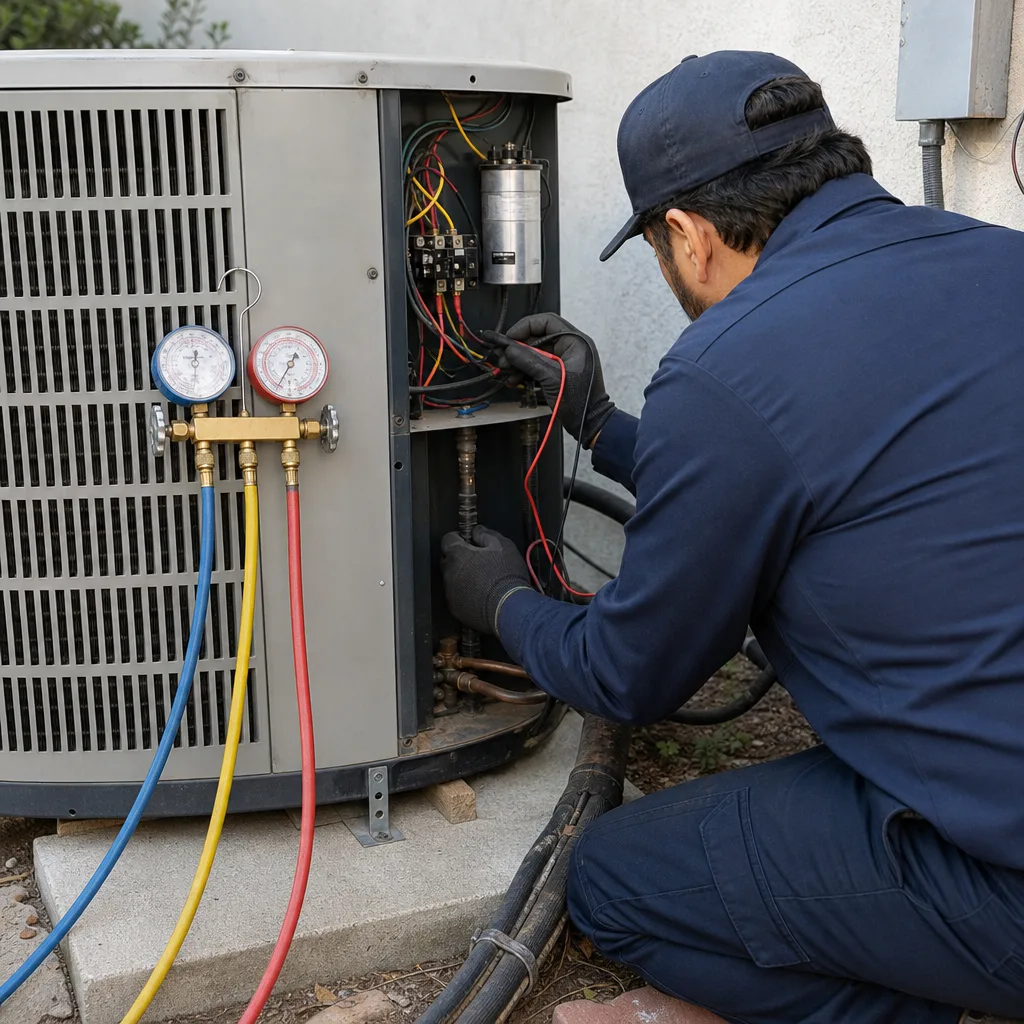
- Capacitor or contactor replacements – common AC repair in Long Beach parts swaps that don’t involve refrigerant or line modification
- Drain line cleaning and condenser coil cleaning – routine maintenance on existing systems
- Fuse or breaker replacement within an existing panel – as long as the circuit itself isn’t being modified
One nuance Long Beach homeowners should know: replacing just the outdoor condenser while leaving the existing indoor coil can trigger a permit requirement if the system’s refrigerant changes or the lineset needs modification. In our experience across Long Beach neighborhoods like Bixby Knolls and Los Altos, half-swaps like this are exactly where unpermitted work tends to hide because the job looks like a simple repair on paper.
Title 24 in Plain Terms: What CF-1R and HERS Actually Mean
Title 24 is California’s energy efficiency building code, updated every three years. For HVAC work, it sets two things: minimum efficiency ratings for equipment and mandatory installation verification procedures. The current 2022 standards, in effect since January 2023, raised the floor for residential cooling efficiency to SEER2 14.3 (roughly equivalent to the old SEER 15) in most of California and SEER2 15.2 (old SEER 16) in hotter climate zones. Long Beach falls into Climate Zone 8, which requires the higher rating.
When your contractor pulls a permit for equipment replacement, they must submit a CF-1R form. This is the compliance document that lists the specific equipment being installed, its rated efficiency, and how it meets Title 24 requirements. Think of it as the energy code’s version of a prescription: it’s written before the work happens and tells everyone exactly what’s supposed to go in.
Here’s where HERS testing comes in. HERS stands for Home Energy Rating System. After the equipment is installed, a certified HERS rater comes out to verify specific things the CF-1R promised. For furnace and AC replacements in Long Beach, the two big-ticket HERS tests are:
- Duct leakage testing – the rater seals off the registers and measures how much conditioned air escapes from the ductwork. Title 24 requires less than 5% leakage for new duct systems in most cases
- Refrigerant charge verification – the rater confirms the cooling system was charged to manufacturer specification, not just “close enough”
- Airflow verification – in some cases, the rater measures actual airflow against design specifications
We regularly install Trane, Lennox, and Goodman equipment in Long Beach homes that already meets or exceeds the current Title 24 minimums. The equipment itself is usually compliant; the failure point is almost always in the installation verification. A system that was installed without HERS verification is, legally speaking, an incomplete installation in California, even if the equipment runs fine.
The Long Beach Permit Process: Fees, Timeline, and Inspections
Long Beach Development Services handles HVAC permits at City Hall on West Ocean Boulevard. The process for a typical residential furnace or AC replacement breaks down into five steps.
- Submit the application – your contractor files the permit application along with the CF-1R compliance form, equipment specifications, and a basic site plan. For straightforward changeouts, this is often approved the same day or within one to two business days.
- Pay the fee – permit fees in Long Beach for residential HVAC work typically run $150 to $450 depending on the scope. A basic furnace swap lands on the lower end; a full system replacement with ductwork changes on the higher end.
- Schedule the rough-in inspection – after the equipment is set and the electrical and gas connections are made but before walls or chase covers are closed up, the inspector verifies the mechanical work, clearances, and seismic straps.
- Complete the final inspection – once everything is finished, the inspector returns to confirm the system operates correctly and the job site meets code. The HERS rater’s verification report must be on file before final sign-off.
- Receive the signed permit card – the final inspection approval closes out the permit. Keep this document; you’ll need it if you sell the house.
Total timeline for a straight replacement: most Long Beach jobs run from permit application to final sign-off in one to three weeks, depending on inspection scheduling. Long Beach offers online permit tracking through the Development Services permit portal, which lets you see exactly where your job stands at any time.
Discovering Unpermitted HVAC Work: Your Options
This situation lands on our desk more often than most Long Beach homeowners expect. You buy a house in Lakewood Village, move in, and during the first service call you hear: “This system was never permitted.” Sometimes it’s flagged during escrow by a sharp home inspector; sometimes it surfaces when a claim gets filed and the insurance company checks permit records against equipment serial numbers.
Here’s what you’re actually facing. An unpermitted installation is a code violation attached to the property. It doesn’t matter that you didn’t install it. The city’s enforcement target is the building, not the person who did the work. Your options:
- Retroactive permitting – Long Beach allows homeowners to apply for a permit after the fact. The process is called an “as-built” permit: the city inspects what exists and determines whether it meets current code. If it does, you pay the permit fee plus any penalties (typically double the original fee) and the violation is cleared.
- Correcting code deficiencies – if the as-built inspection finds violations, like improper clearances or missing seismic straps, you’ll need to correct them before the permit can close. Expect the cost for typical corrections to run $300 to $1,500 depending on what’s wrong.
- Replacing the system – if the existing equipment is old enough that correcting deficiencies would cost more than replacement, many Long Beach homeowners choose to start over with a properly permitted installation. You avoid the retrofit fees and the inspection penalties.
- Disclosing and deferring – technically, you can leave the unpermitted work alone and disclose it when you sell. In Long Beach’s competitive real estate market, this typically means a price reduction or a buyer demand for retroactive permitting as a condition of sale.
One thing our team tells every Long Beach homeowner in this situation: don’t assume the problem stays hidden. Permit records are public through the Long Beach Development Services online portal, and buyers’ agents in this market regularly pull those records before writing offers.
How to Verify Your Contractor Actually Pulled the Permit
The permit fee on your invoice doesn’t mean a permit exists. We’ve seen Long Beach jobs where the contractor collected the fee, never filed the application, and the homeowner discovered it only when the city issued a stop-work notice. Here’s how to protect yourself before the equipment goes in.
Use the Long Beach permit lookup tool. The city’s Development Services department maintains an online permit search portal where you can search by address. After your contractor says the permit is pulled, search your address. You should see a permit record with a status of “issued” or “in-review” and a description matching the work you’re paying for. If you see nothing, the permit doesn’t exist.
Request the permit number in writing. Any legitimate contractor in Long Beach will give you the permit number without hesitation. If they’re vague about it, treat that as a red flag. The Garrison Standard requires every job that needs a permit to have it issued before equipment arrives on site, and the permit number goes on your written quote.
Look for the job site permit card. Once the permit is issued, Long Beach requires it to be posted at the job site. It’s a simple paper card with the permit number, the approved scope of work, and the inspection schedule. If there’s no card on the wall or window during the job, ask where it is.
What Permitting Adds to Your Total Project Cost
Permit fees themselves are relatively small. What catches Long Beach homeowners off guard is what Title 24 compliance adds to the project when you’re dealing with an older home. Here’s a realistic breakdown.
- Long Beach permit fees – $150 to $450 for a typical residential HVAC changeout
- HERS rater fees – $250 to $600 depending on which tests are required
- Duct sealing and repair to pass leakage testing – $200 to $1,200 if your existing ducts are leaky (and older Long Beach homes frequently are)
- Seismic strapping and clearance corrections – $100 to $500 for water heaters and equipment that must be brought up to code as part of the inspection
- Total permitting and compliance cost – typically $700 to $2,500 on top of the equipment and labor
That’s the honest math. The unpermitted route saves you the permit fee and HERS testing, which is why the temptation exists. But you’re trading roughly $700 to $1,100 in immediate savings for a liability that can cost ten times that to unwind at resale. We’ve never met a Long Beach homeowner who thought that trade was worth it after the fact.
Common Mistakes to Avoid
- Paying the permit fee without verifying the permit exists. Check the Long Beach permit portal by address within three days of paying. If there’s no record, call the contractor and ask for the permit number. No number, no work.
- Skipping HERS verification to save the rater fee. Without the HERS report, your permit cannot close in California, which means your installation is incomplete on paper. This bites you at resale or on an insurance claim, not at installation.
- Assuming a home warranty company handles permits. Most home warranty contractors in Long Beach install replacement equipment without pulling permits because the warranty company won’t pay for compliance costs. Read the fine print; you typically end up responsible.
- Doing a half-swap without checking the implications. Replacing only the outdoor unit while leaving an old indoor coil can create a mismatched system that fails Title 24 efficiency requirements and voids the manufacturer’s warranty on the new condenser. We see this regularly with Rheem and Goodman equipment installed piecemeal throughout Long Beach.
- Buying a house with an unpermitted system without negotiating. If an inspection flags unpermitted HVAC work, the cost of retroactive permitting is a legitimate seller concession. Don’t absorb it as a surprise cost after closing.
- Ignoring Local Amendment Requirements. Long Beach has its own mechanical code amendments beyond state standards, including corrosion-protection requirements for coastal properties in areas like Belmont Shore and Naples. A job that passed inspection in Los Alamitos isn’t automatically compliant in Long Beach.
When to Call a Professional
If you’re replacing a furnace, air conditioner, or heat pump in Long Beach, this is not a job where the permitting and compliance work can be reasonably separated from the installation. The contractor who installs the equipment should handle the permit, the CF-1R filing, the HERS rater coordination, and the inspection scheduling as a single package. If a contractor offers to do the installation while you “handle the permit yourself,” walk away; it’s a sign they either don’t understand the process or are trying to keep their name off the paperwork. Dalton Heating & Air Long Beach offers free estimates on permitted replacements in Long Beach. Call (562) 512-7423 and Marco Benitez can walk you through exactly what your project needs before any work starts.
Frequently Asked Questions
Residential HVAC permit fees in Long Beach typically range from $150 to $450 depending on the scope of work, with basic furnace or AC changeouts on the lower end and full system replacements with ductwork changes on the higher end. For a complete overview of what to check before scheduling service, see our AC Repair Maintenance Checklist for Long Beach Homeowners. In addition to the city fee, budget $250 to $600 for HERS testing and $200 to $1,200 for any duct sealing required to pass leakage testing. For an exact number on your specific project, call (562) 512-7423 for a free estimate.
Yes, replacing an air conditioner condenser or a full cooling system requires a mechanical permit in Long Beach, and the replacement must also meet current Title 24 energy standards with HERS verification. The only AC work that’s exempt is like-for-like parts replacement that doesn’t involve refrigerant, electrical, or line modifications, like a capacitor or contactor swap.
If your system was installed without a permit in Long Beach, the city can require you to obtain a retroactive “as-built” permit, which involves an inspection and potentially paying double the original fee plus correction costs. The violation also becomes a mandatory disclosure item when you sell the property. You can clear it voluntarily by applying for the as-built permit through Long Beach Development Services.
Title 24, Part 6 is California’s energy code, and yes, any new AC, furnace, or heat pump installation in Long Beach must meet its requirements, including minimum SEER2 efficiency ratings and HERS verification of duct leakage and refrigerant charge. Long Beach is in Climate Zone 8, which requires a minimum SEER2 rating of 15.2 for cooling equipment.
For a standard residential HVAC changeout, the Long Beach permit process from application to final sign-off typically takes one to three weeks. The application is often approved within one to two business days for straightforward jobs, with inspections scheduled on a first-come basis for rough-in and final.
California law allows a homeowner to install HVAC equipment on their own owner-occupied single-family residence with an owner-builder permit, but you take on full liability for code compliance, Title 24 verification, and the quality of the installation. In our experience across Long Beach homes from North Long Beach to the Peninsula, the risk of an improper refrigerant charge or an incorrectly sized unit usually costs more to fix than the labor you saved.
The Bottom Line
California’s HVAC permitting system exists to protect you from exactly the kind of problems that surface years after the installer’s truck has pulled away. In Long Beach, the permit process is manageable: apply through Development Services, pay $150 to $450 depending on scope, pass a rough-in and final inspection, and file the HERS verification report that Title 24 requires. The cost of doing it right runs $700 to $2,500 in total compliance expenses on most residential jobs. The cost of skipping it runs to five figures at resale, on an insurance claim, or when the city discovers it. Permitted work is the only kind that holds up over time, and it’s the only kind we install.
Written by Marco Benitez, Owner at Dalton Heating & Air Long Beach, serving Long Beach since 2003.
See the difference
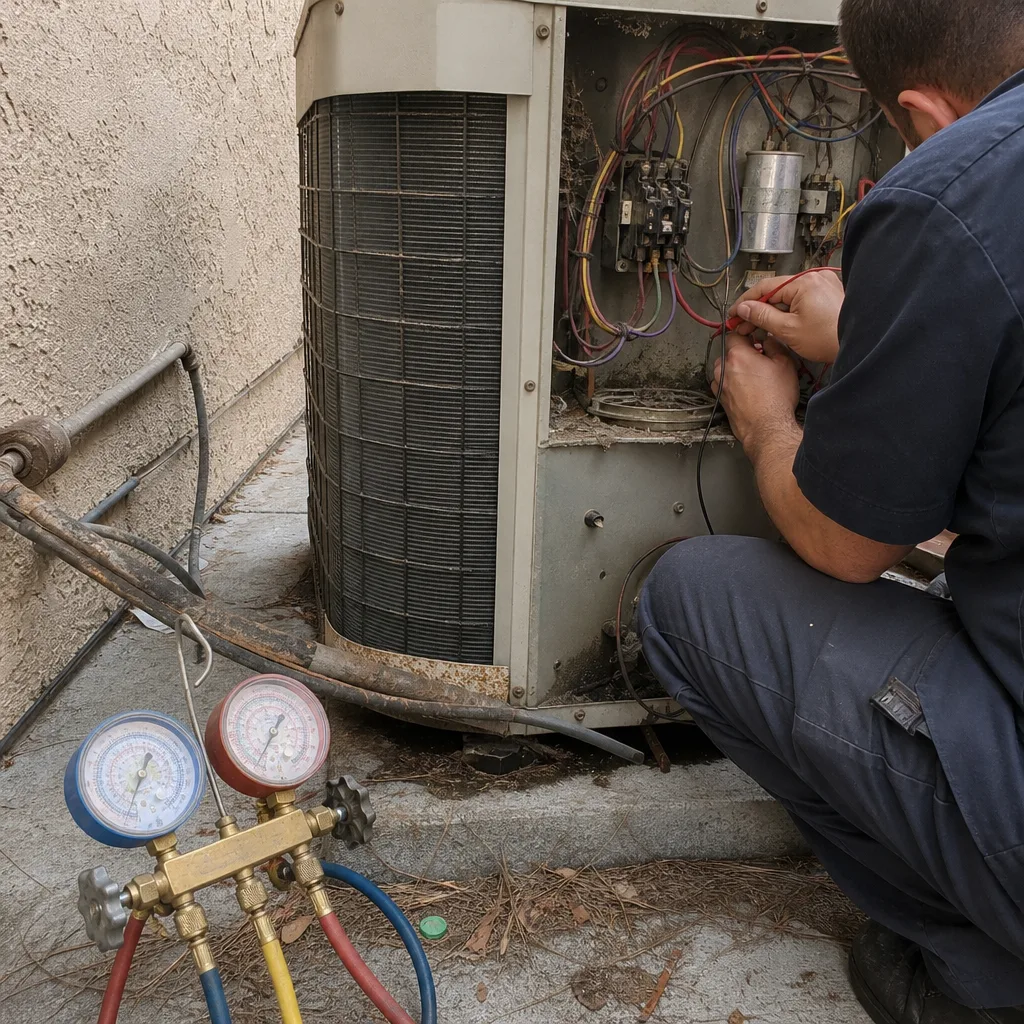 Before
 After
After Before
 After
After Before
 After
After