
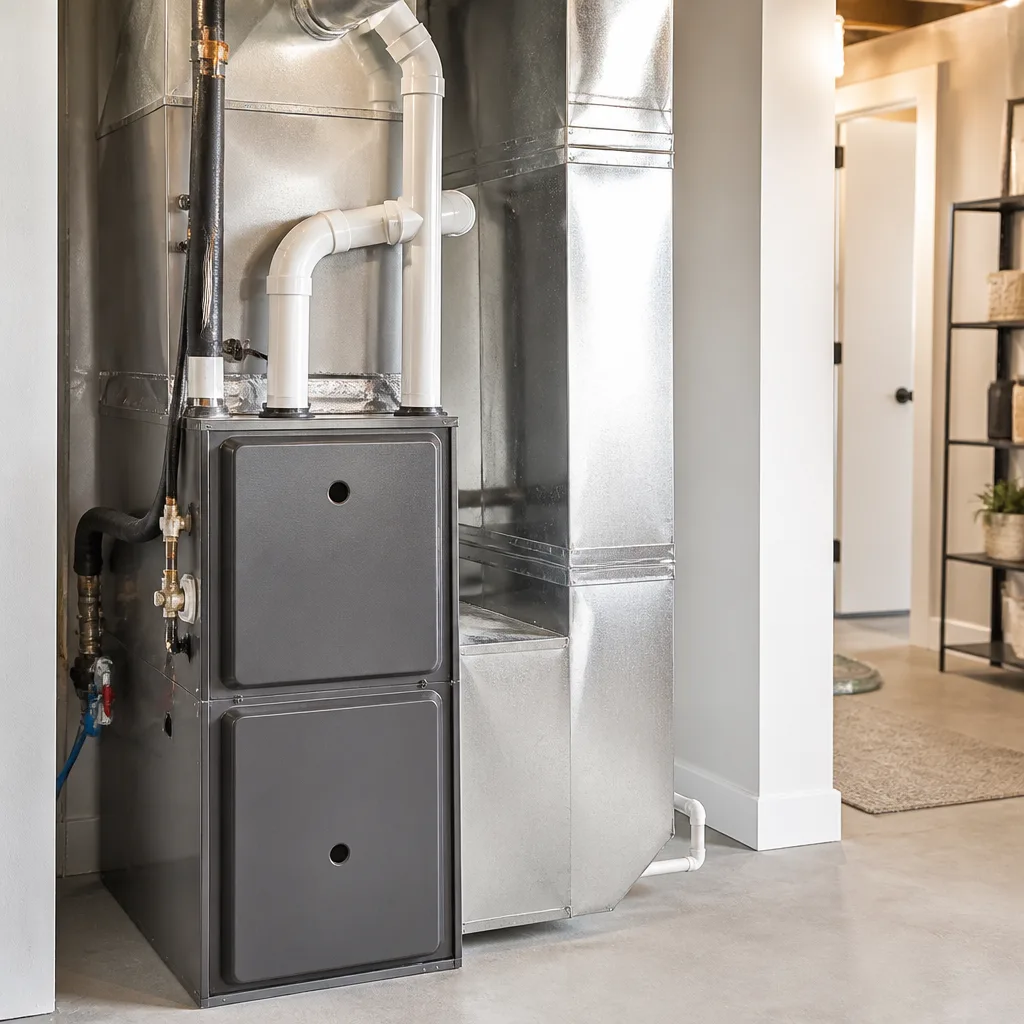
 Furnace & heating
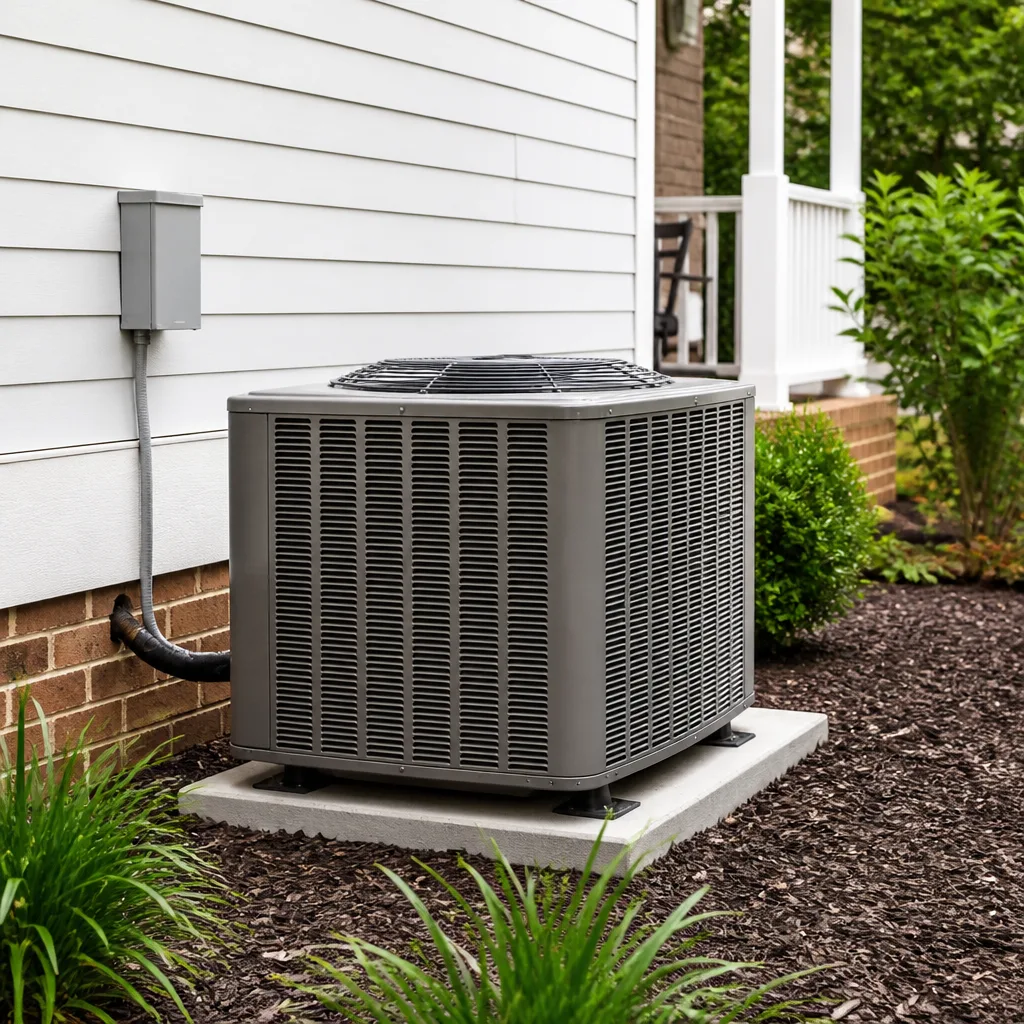 AC repair
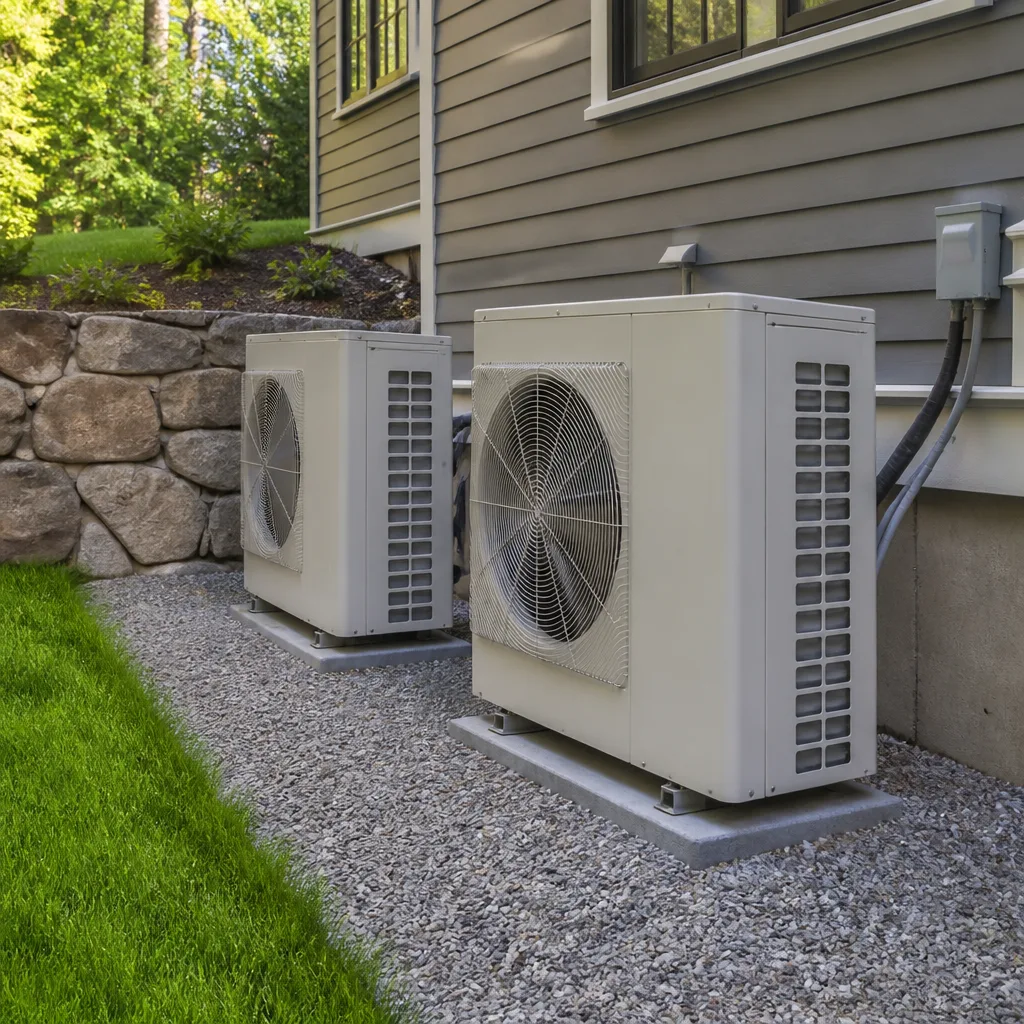 Heat pumps
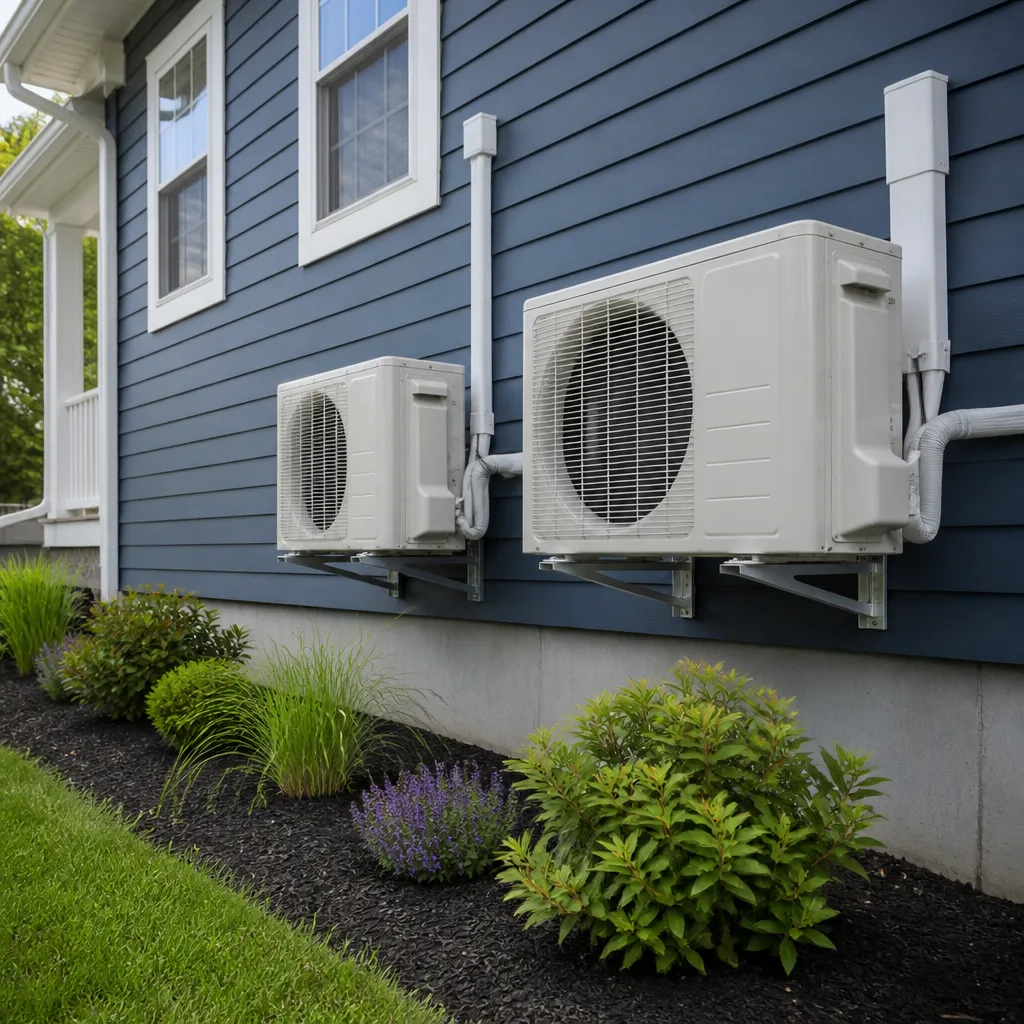 Ductless mini splits
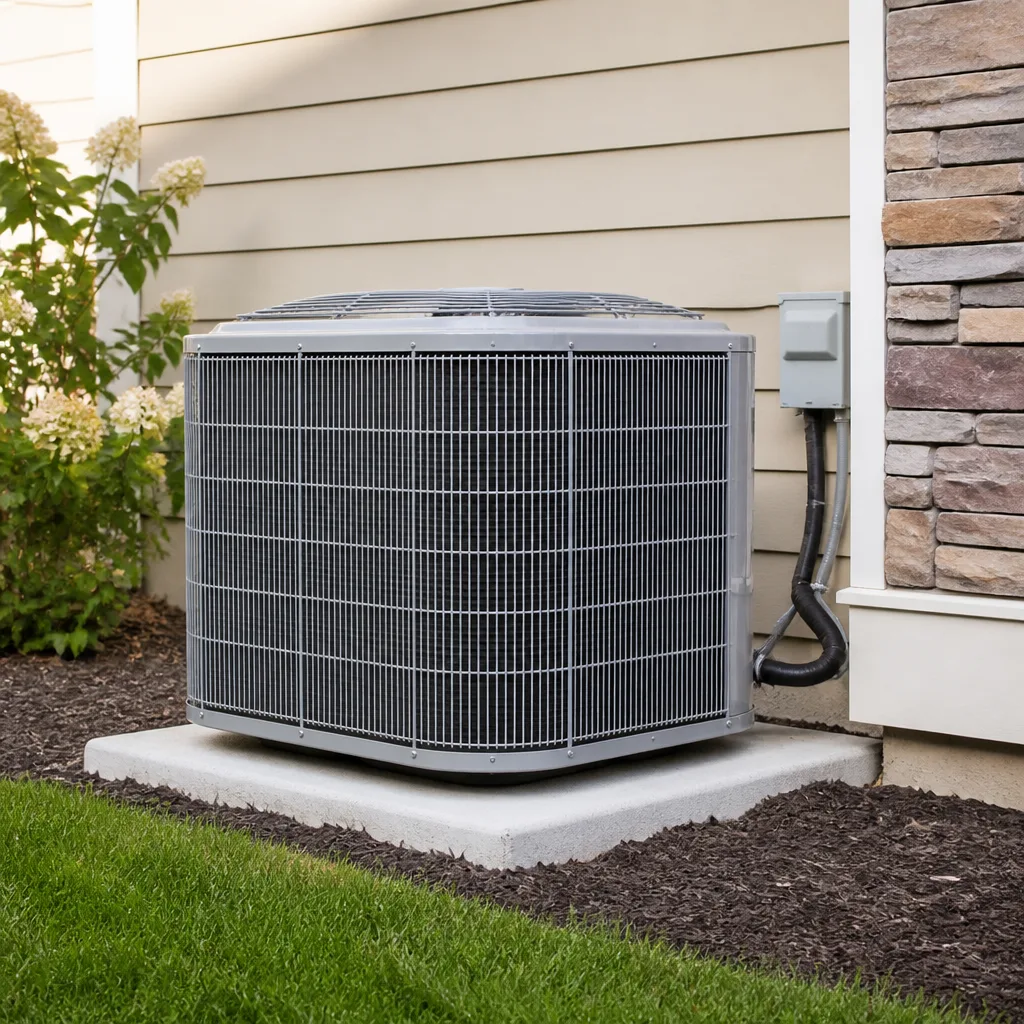 Carrier
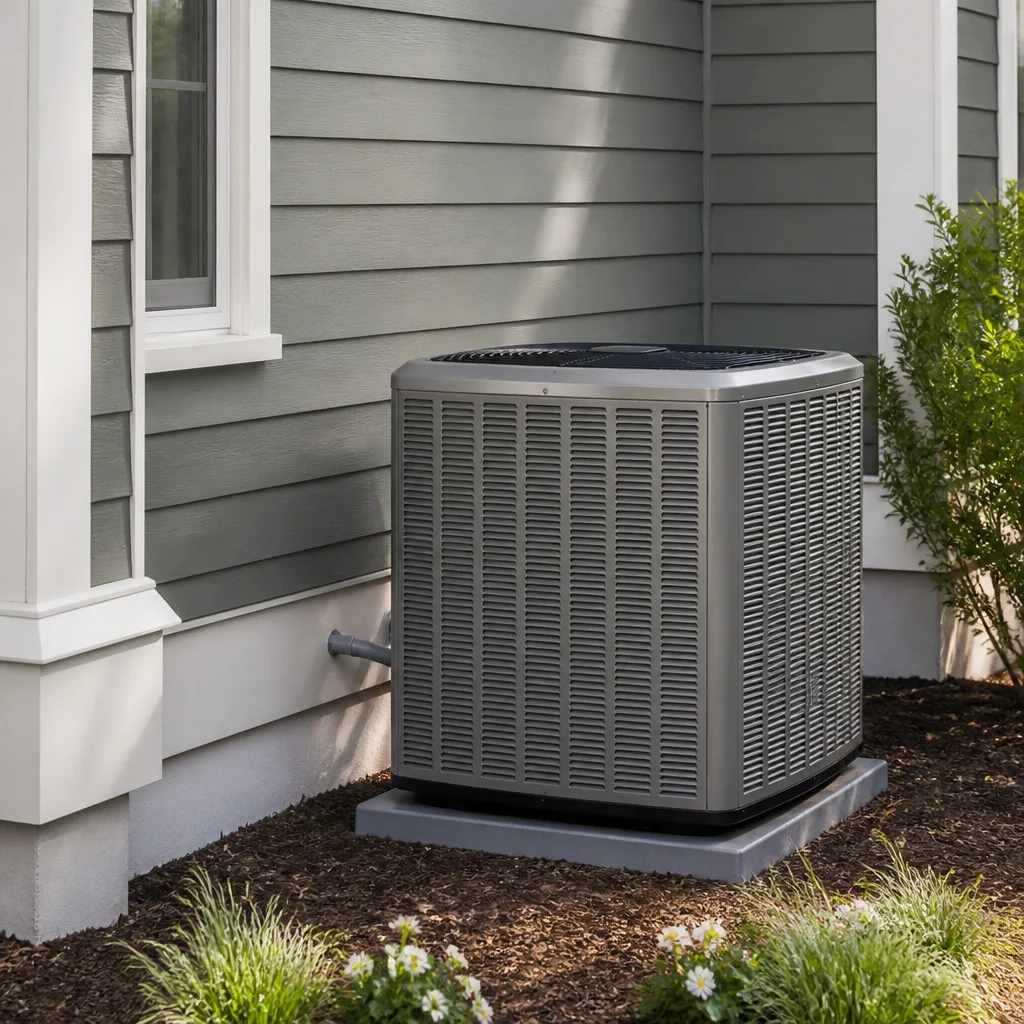 Trane
Trane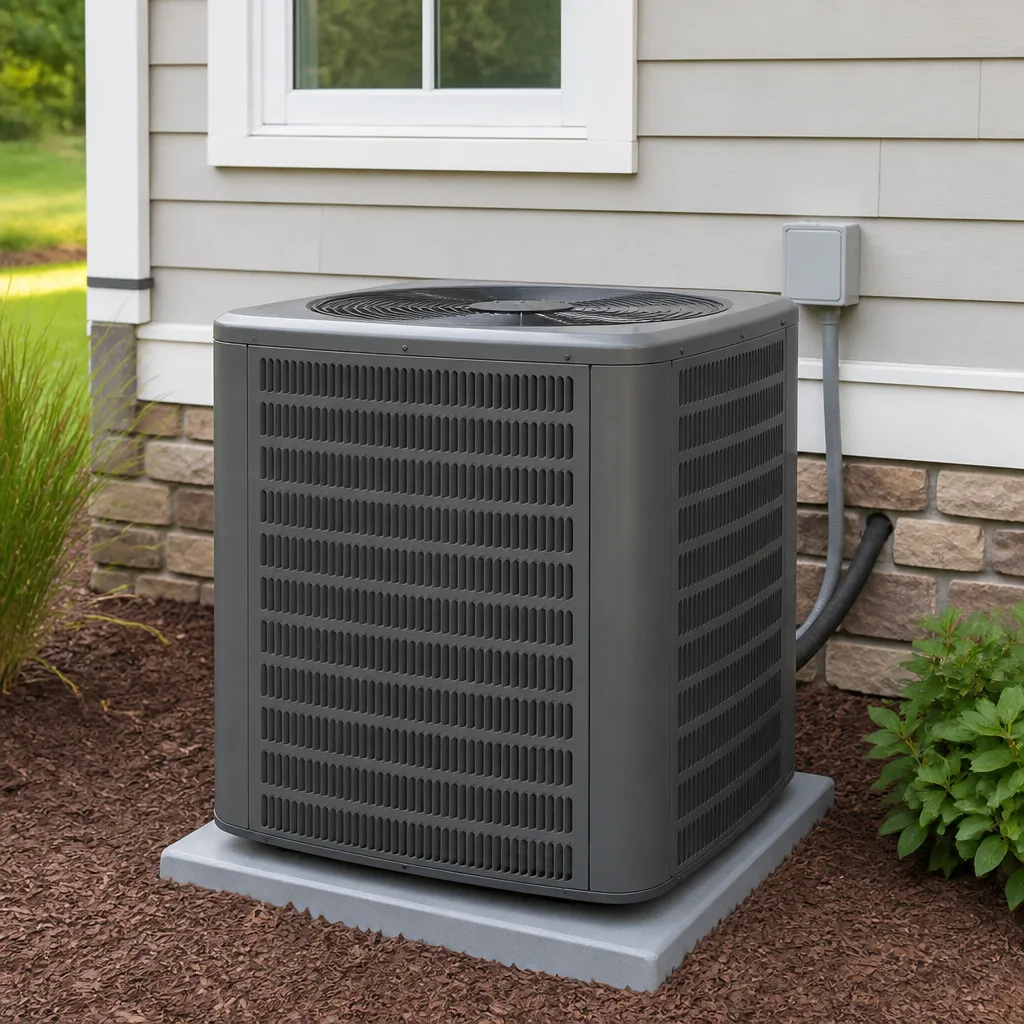 Goodman
Seasonal tune-up and full diagnostic on your Carrier, Trane, or Goodman system - readings shown to you before any repair is proposed
Diagnosis first, numbers second - you approve the repair price before a single part goes in.
Get your free estimateLennox Capacitor Replacement: The Long Beach Owner’s Guide
A Lennox capacitor replacement in Long Beach typically runs $150 – $450 installed, and we carry the common Lennox-compatible dual and single-run capacitors on our trucks so the swap usually happens same-day. You’ll know it failed when your outdoor unit hums but the fan won’t spin, or the compressor clicks and gives up. If you’re standing next to a Lennox condenser right now listening to that hum, shut the system off at the thermostat and then at the breaker, because a failed capacitor left energized can cook the compressor, and that’s a $2,000 problem born from a $30 part.
Here’s the deal on Lennox capacitors specifically: Lennox doesn’t manufacture the capacitors themselves. They source them from the same industrial suppliers that make most OEM capacitors, then put a Lennox part number on the label. What matters is matching the microfarad (µF) rating and voltage, not the logo. That’s the compatibility gotcha worth knowing before you order a part online.
Key Takeaways:
- Installed Lennox capacitor replacement in Long Beach: $150 – $450
- We stock common Lennox capacitor specs on the truck for same-day service
- The part is safe to replace by hand, but only if you know how to discharge stored voltage (explained below)
- Every repair includes a written price before work starts and a written one-year guarantee
Which Lennox Models This Applies To
Every Lennox residential condenser and heat pump has at least one capacitor. Most single-stage Lennox units from the Merit, Elite, and Signature series use either a dual-run capacitor (one can, two ratings: compressor side and fan side) or two separate single-run capacitors. Common Lennox part-number series you’ll see on the original capacitor include the 100335-xx, 22W78, and the 10M42 line, though Lennox revises part numbers regularly and the number on your unit won’t always match the number on the capacitor itself because Lennox changes suppliers between model years.
Here’s how to identify what you need without guessing: read the label on the failed capacitor. The label shows the microfarad rating (like 35/5 µF for a dual-run, or 370V or 440V for the voltage class), and the physical shape tells you round or oval. The important compatibility rule with Lennox is that you can substitute a 440V capacitor for a 370V capacitor, but never the reverse. Voltage rating on a capacitor is a ceiling, not a requirement. Higher is fine. Lower risks failure. That one detail saves people from buying the wrong part online.
We install OEM Lennox capacitors when the unit is under active manufacturer parts warranty and OEM equivalent aftermarket units when it isn’t. The electrical specifications are identical; the difference is the label and the price. We also carry compatible capacitors for Carrier and Trane systems for the times a Long Beach home has mixed-brand equipment.
Styles & brands we work with
Signs Your Lennox Capacitor Replacement Is Failing
- Humming without startup. The classic. The capacitor can’t deliver the torque to get the fan motor or compressor spinning, so you hear the hum of the motor trying and failing. If you leave it humming, the motor pulls locked-rotor amps and burns out.
- The fan spins slowly or only with a push. A weak capacitor still delivers some voltage, but not enough rated output. If you can start the fan with a stick but it won’t start on its own, that’s a dying capacitor, not a fan motor.
- The compressor short-cycles. The compressor starts, runs a few seconds, trips its thermal limit, and shuts off. A capacitor holding only partial charge can start the compressor but not keep it running at full voltage under load.
- Bulging or leaking capacitor case. A healthy capacitor is a clean cylinder. A failed one often swells at the top, splits a seam, or leaks a small amount of dielectric fluid. Once you see deformation, it’s done. There’s no repair path for a swollen capacitor.
- Your AC runs but doesn’t cool. The compressor runs on the capacitor’s fan side only, or runs backward. With a dual-run capacitor, if the compressor half fails but the fan half still works, you get airflow and no cooling. People sometimes mistake this for a refrigerant problem.
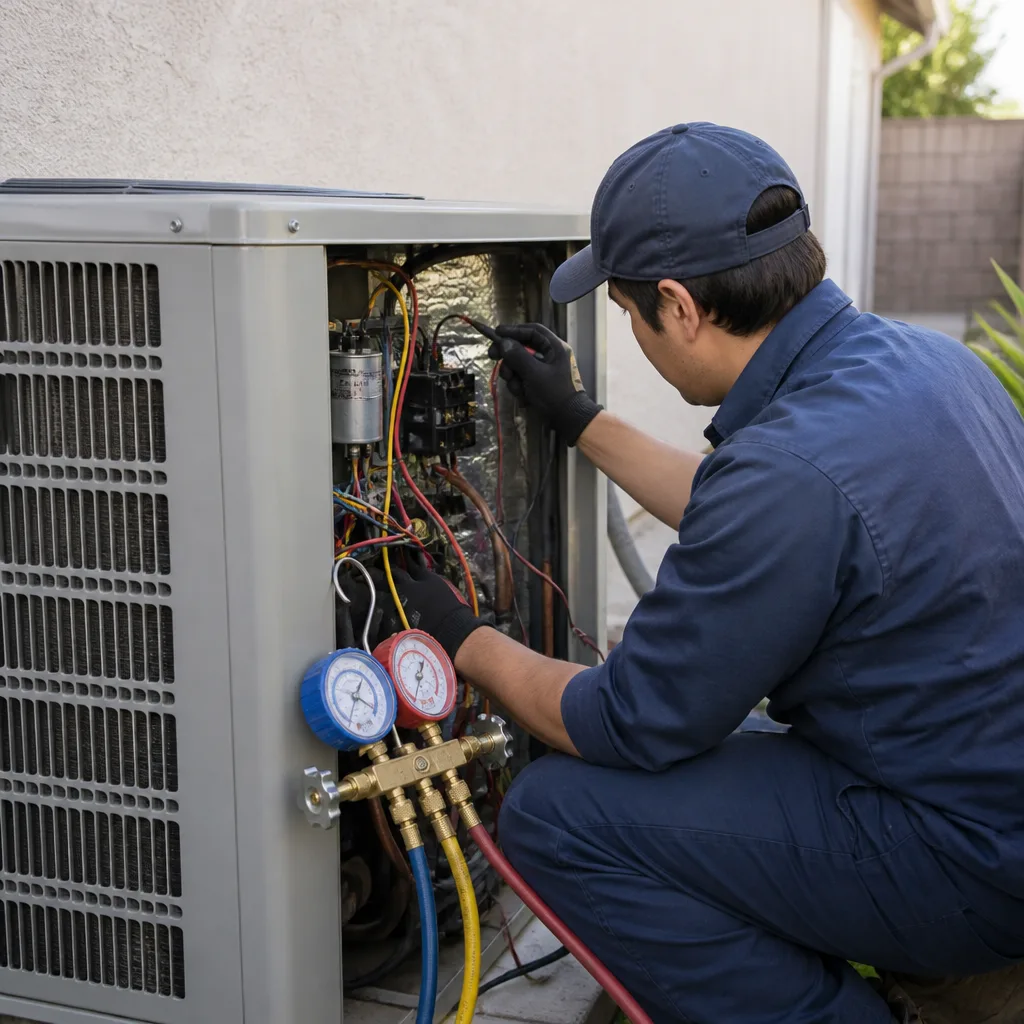
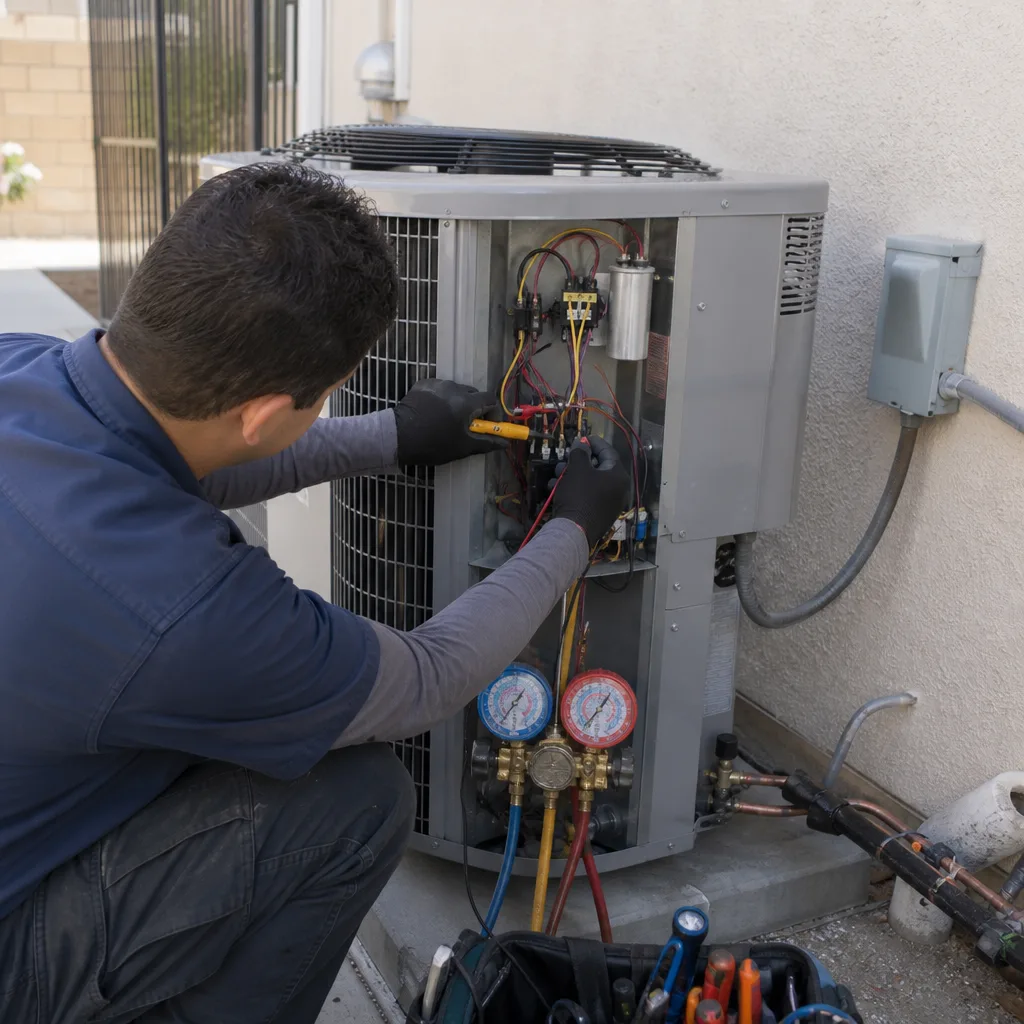
See the difference
 Before
 After
After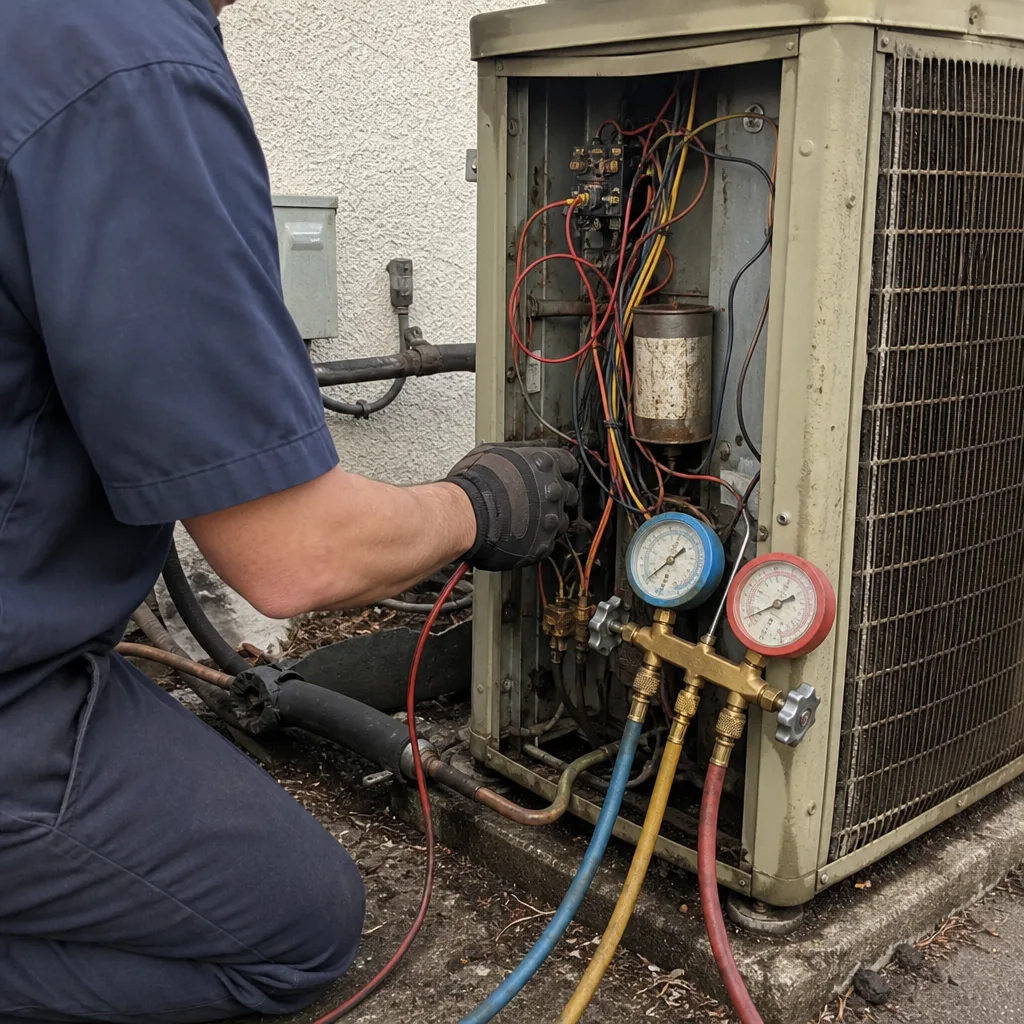 Before
 After
After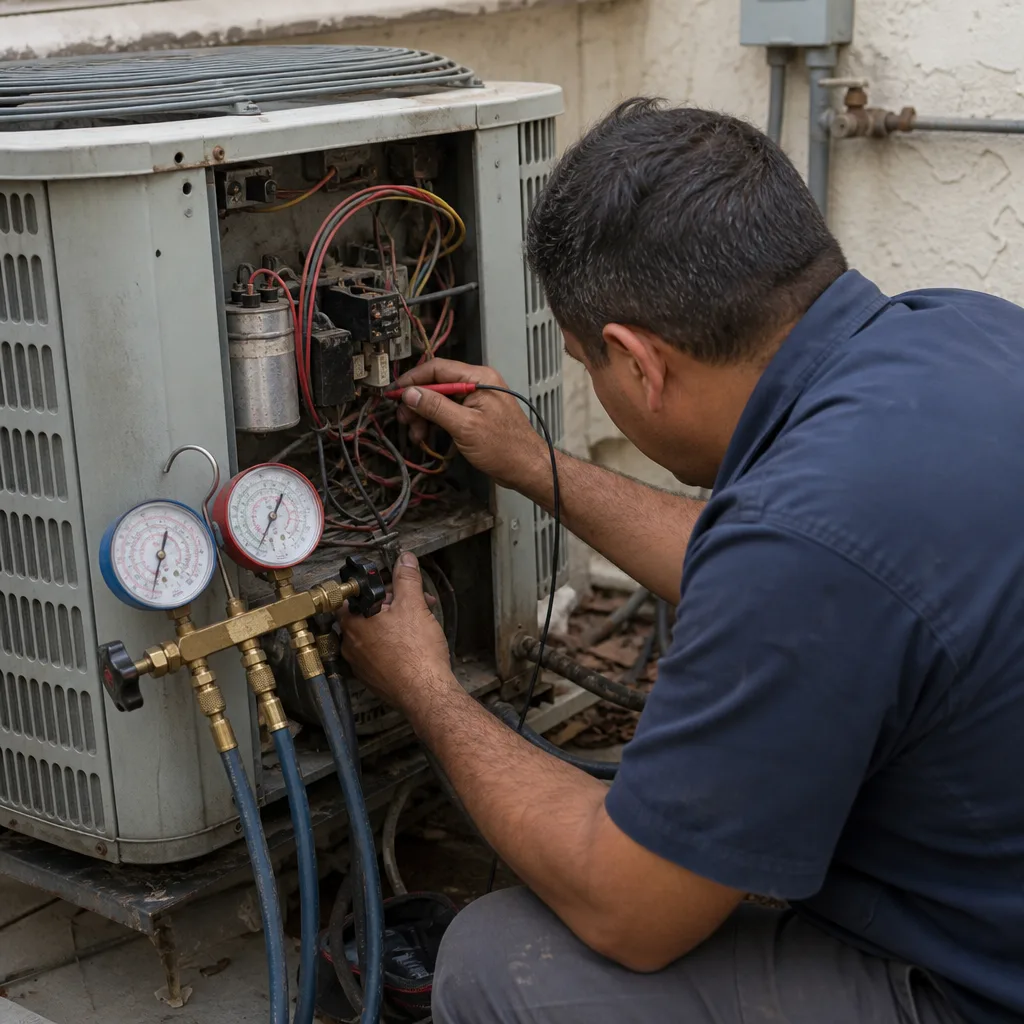 Before
 After
AfterReplacement Cost & What’s Included
In Long Beach, a Lennox capacitor replacement installed by us runs $150 – $450. The part itself is typically a $15 – $60 component at our cost. The range depends on whether it’s a single or dual-run capacitor, whether we need to run a new wire lead or clean a corroded terminal, and whether the unit needs additional diagnosis time. Most single-capacitor swaps land at the lower end. Dual-run capacitors on heat pumps or units with a start capacitor and relay land at the higher end.
Every quote includes the part, the labor to replace it, a full electrical check of the contactor and wiring while we’re in the panel, and our written one-year guarantee on the repair. You get the price in writing before we touch anything. If the repair fails inside a year, we return and make it right at no charge under our 365-Day Done Right Promise. You won’t get an invoice that changed between the quote and the bill because that doesn’t happen on our jobs, period.
DIY or Call Us?
Here’s my honest answer, and I’ll start with the part everyone gets wrong: a capacitor stores voltage even after you kill power to the unit. If you pull the disconnect and immediately grab the terminals, that stored charge can knock you hard. It won’t necessarily kill you, but it’ll make you respect electricity in a way that lingers. The safe way to handle it is to discharge the stored voltage with an insulated tool and verify it’s dead with a meter before touching a terminal. If you don’t own a multimeter or aren’t sure what I just described, stop there.
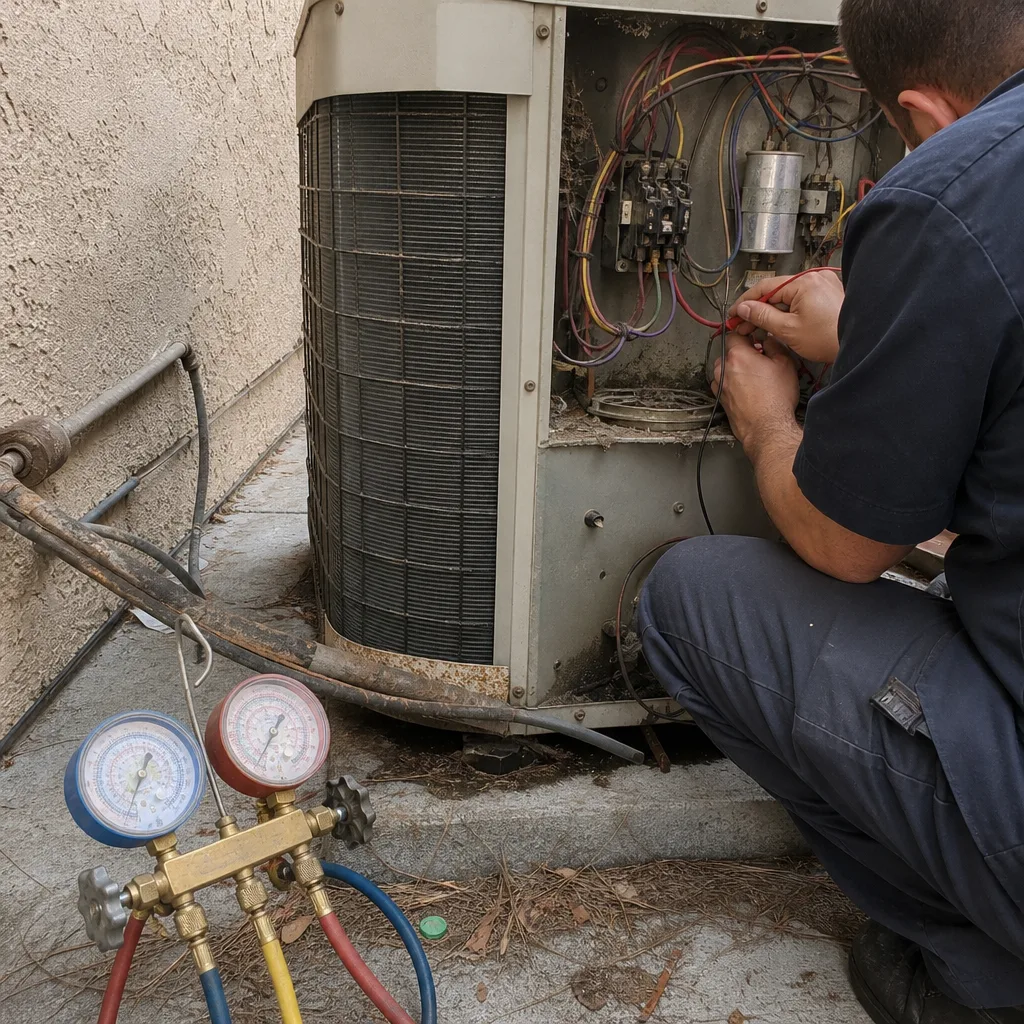
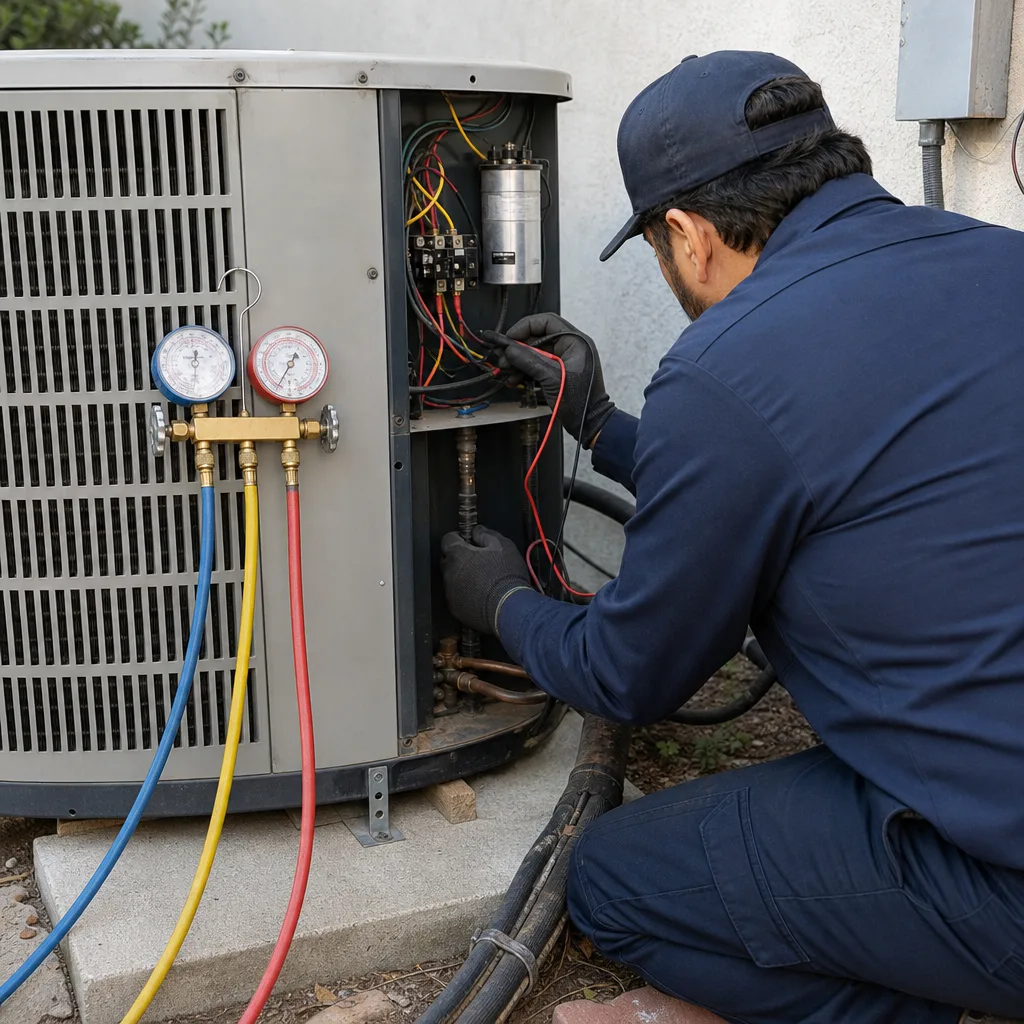
What you can safely do is confirm the diagnosis. Kill the power at the breaker, pop the condenser panel, and look at the capacitor. If it’s swollen, bulging, or leaking fluid, that’s your answer: bad capacitor. Put the panel back, leave it shut down, and call us at (562) 512-7423. The swap itself takes a trained tech under 45 minutes, and unlike a YouTube tutorial, we’re also checking the contactor, the wiring, and the amp draw to make sure the capacitor didn’t fail because of something deeper. A capacitor is often the symptom, not the root cause, and the root cause is where a written guarantee matters.
FAQs
In the Long Beach climate, expect 5 to 10 years. The salt air along the coast toward Belmont Shore and Naples accelerates terminal corrosion on outdoor electrical components, and our summer heat waves push capacitors to work harder than they would in milder climates. When one fails at year seven, that’s a normal lifespan, not a defect.
No. A capacitor is a sealed, disposable component. Once it swells, leaks, or loses capacitance, the only correct repair is replacement with a unit matching the microfarad and voltage ratings. Anyone offering to refurbish one is selling you a used part with a shorter future.
From arrival to a running system, most Lennox capacitor replacements take 30 to 60 minutes. That includes the full electrical check we do on every call. Call (562) 512-7423 and Marco or one of the crew will give you a straight time window for your neighborhood.
Yes. We keep the most common Lennox dual and single-run capacitor specs stocked on our service vehicles, so if yours has failed and matches what we carry, we can usually complete the repair the same day without a parts house run. If you have an unusual oval or triple-terminal configuration, we’ll source it same day from our Long Beach supply network.
Written by Marco Benitez, Owner, Dalton Heating & Air Long Beach at Dalton Heating & Air Long Beach, serving Long Beach and nearby areas.