
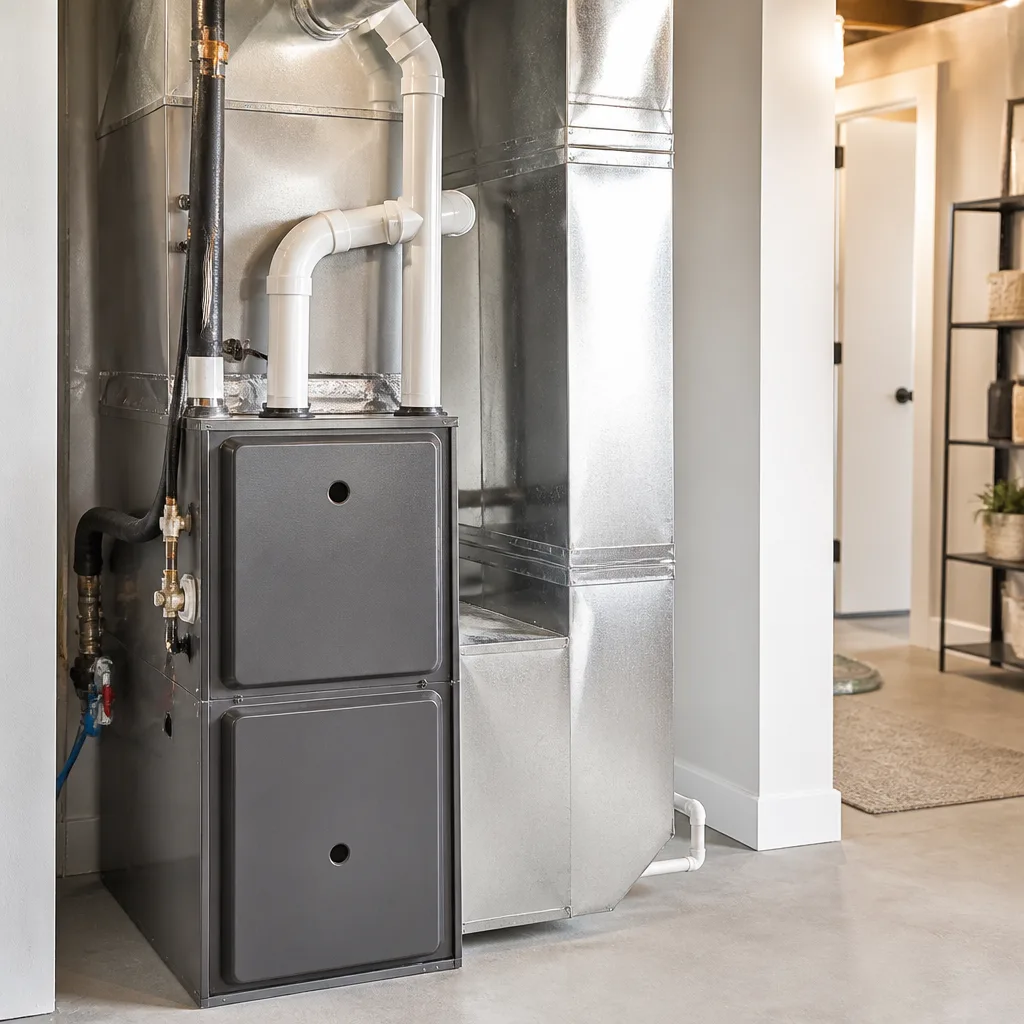
 Furnace & heating
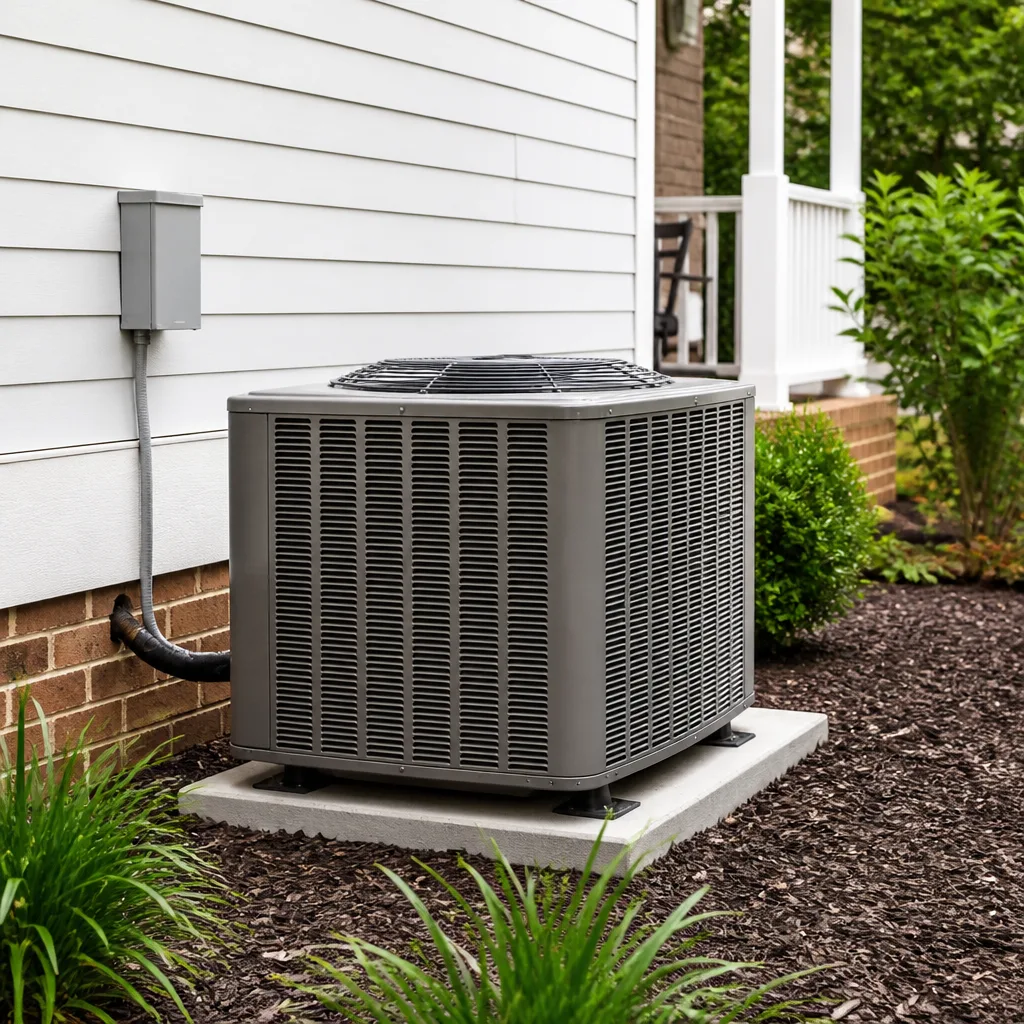 AC repair
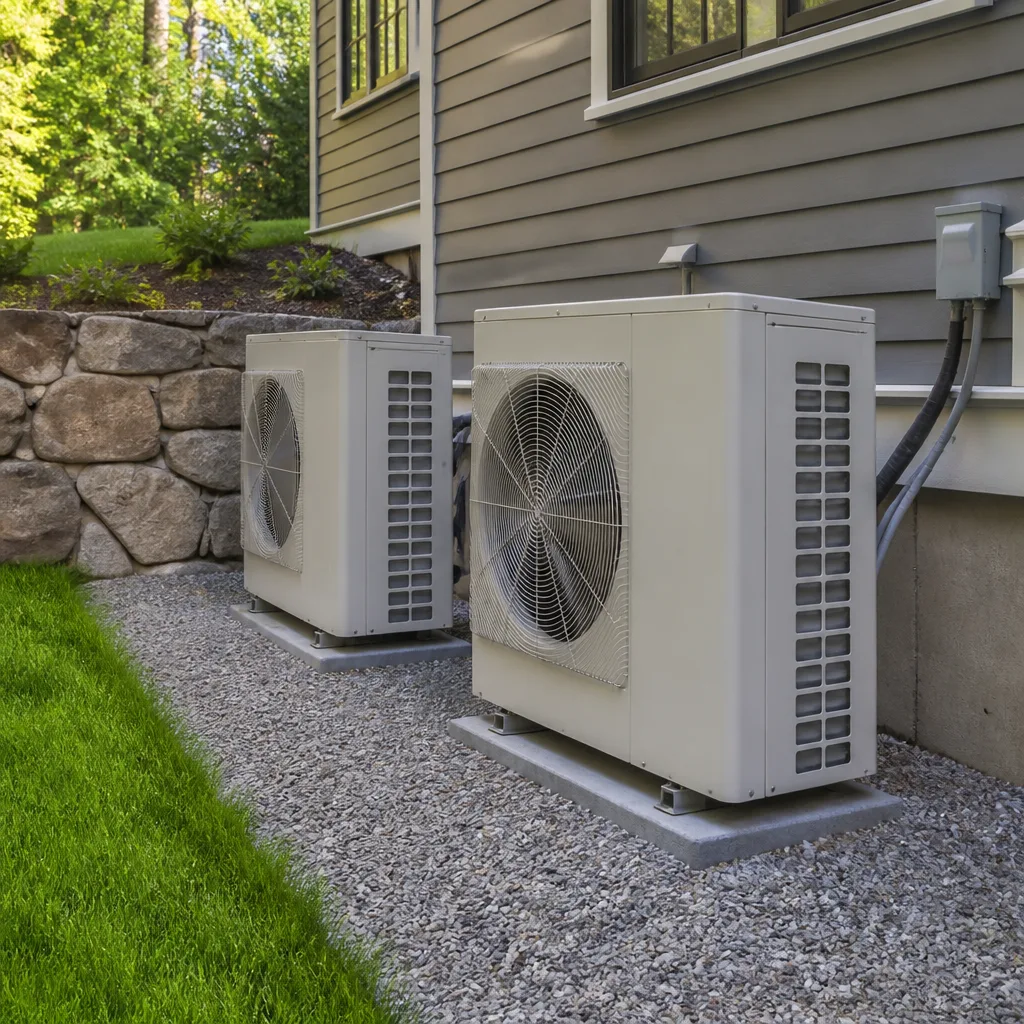 Heat pumps
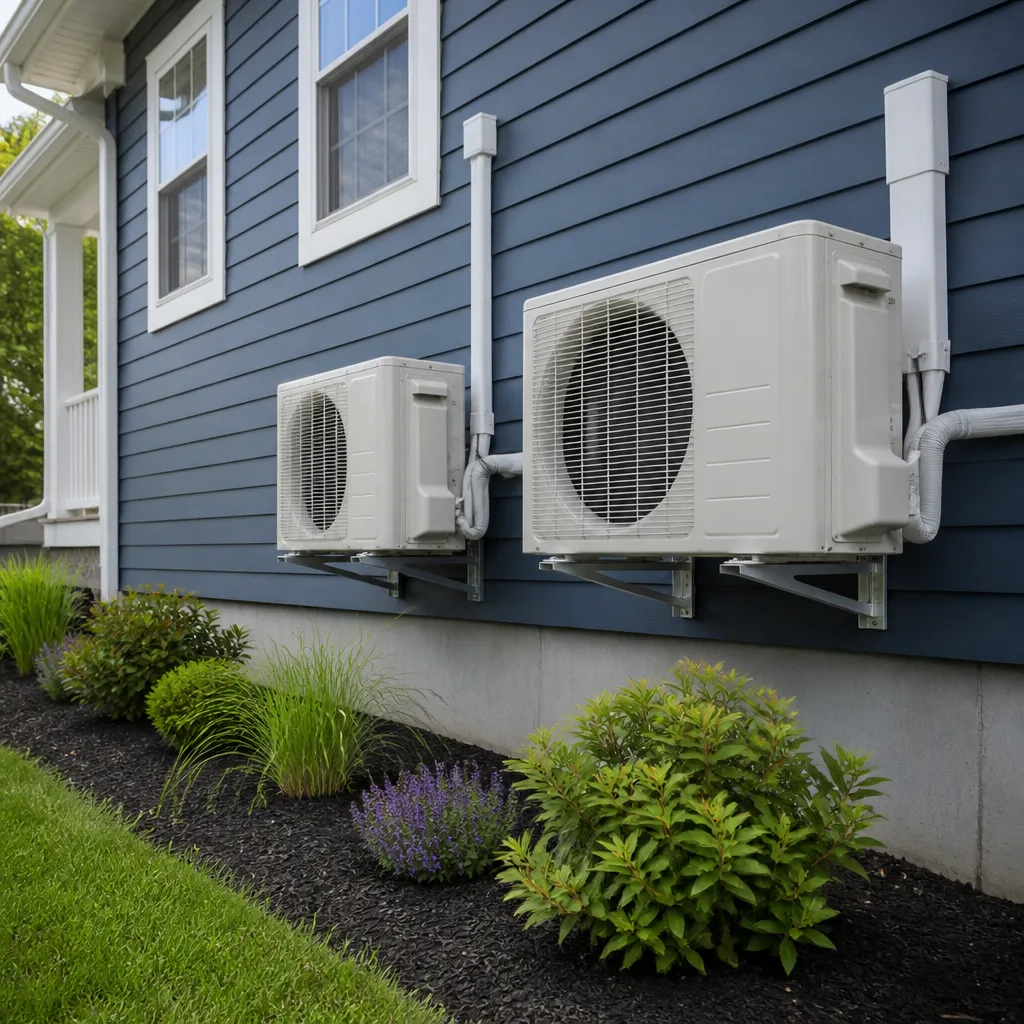 Ductless mini splits
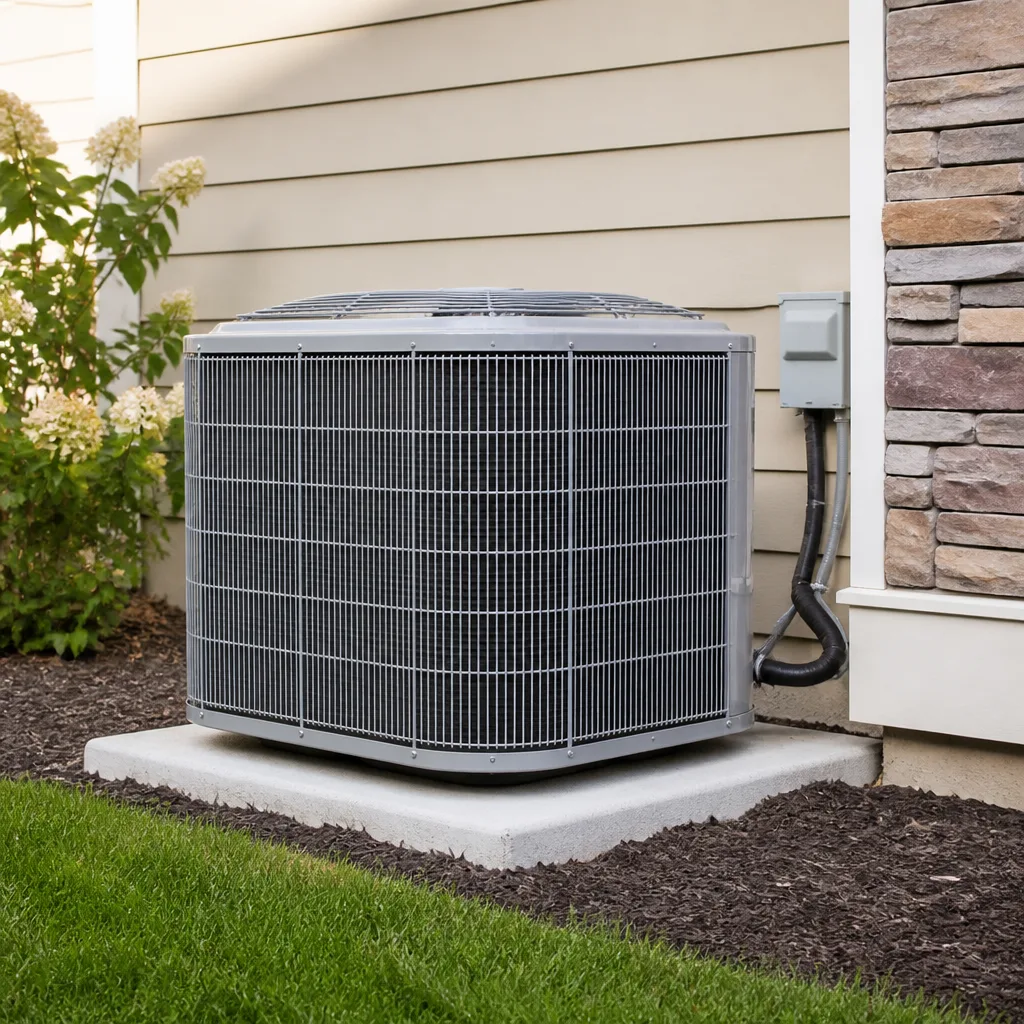 Carrier
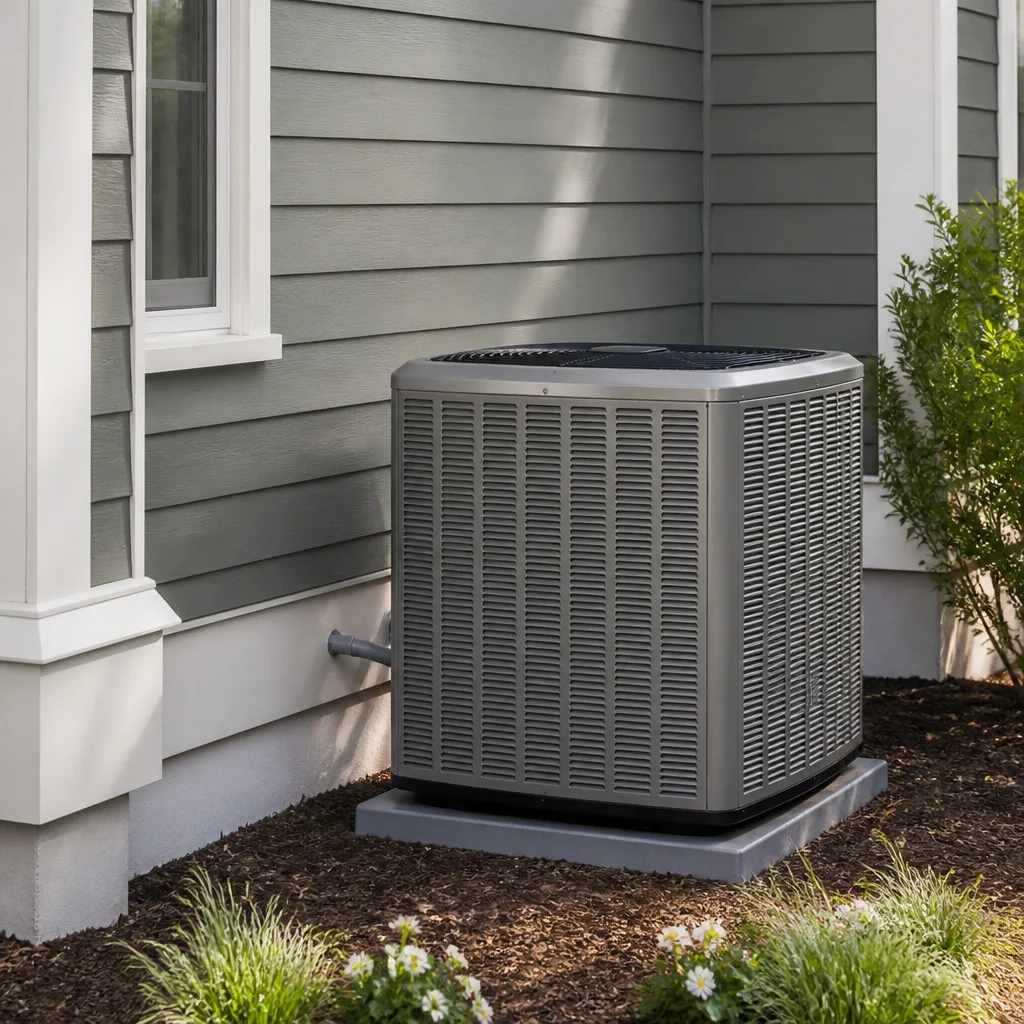 Trane
Trane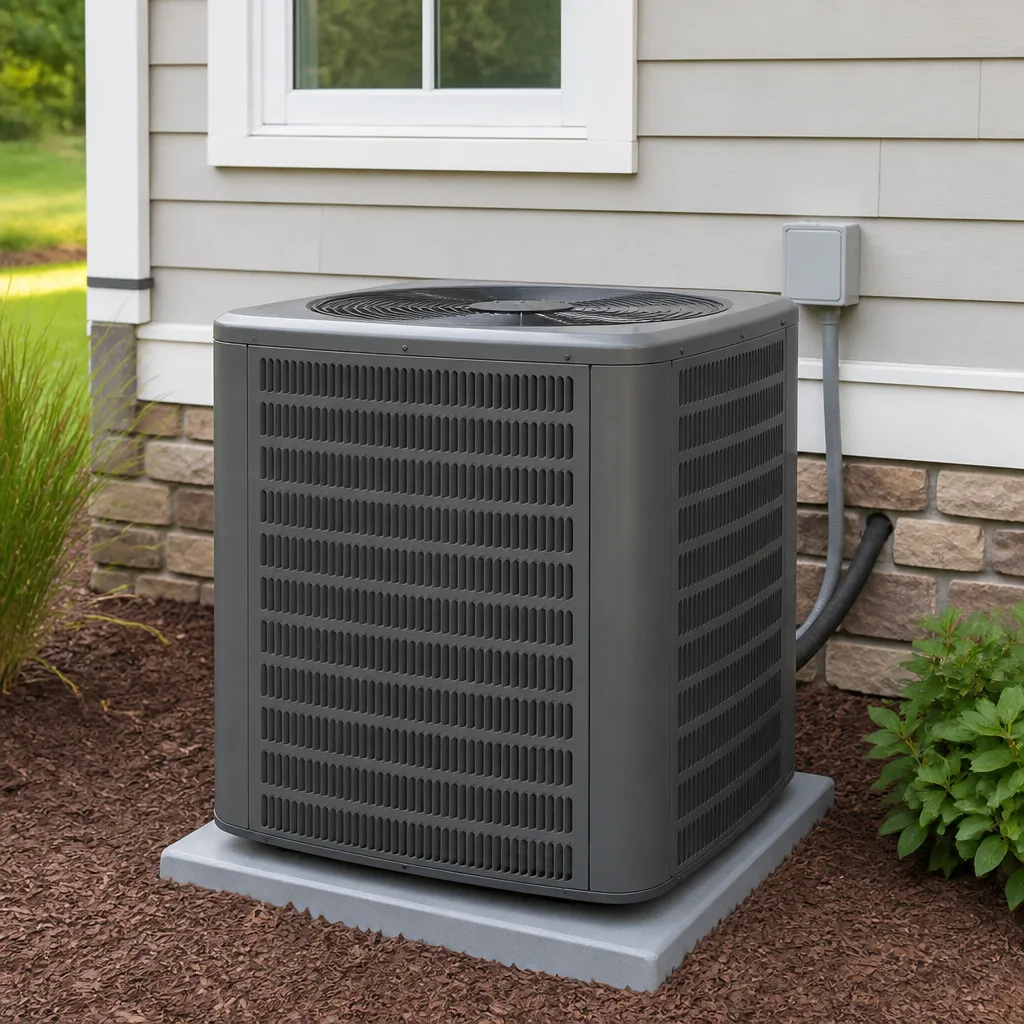 Goodman
Seasonal tune-up and full diagnostic on your Carrier, Trane, or Goodman system - readings shown to you before any repair is proposed
Diagnosis first, numbers second - you approve the repair price before a single part goes in.
Get your free estimateCarrier Capacitor Replacement: The Long Beach Owner’s Guide
A Carrier capacitor replacement in Long Beach typically runs $150 – $320 installed, depending on whether it’s a single or dual-run capacitor and which Carrier model you have. Most failed capacitors we replace are on the truck, which means this is a same-visit fix, not a “we’ll order it and call you back” situation.
How most Long Beach homeowners find out: the AC sounds like it’s trying to start, hums for a few seconds, then shuts off. Or the outdoor unit runs but the fan isn’t spinning. Or you come home to a house that’s ten degrees warmer than it should be on an August afternoon. That hum-and-click is the outdoor unit straining against a capacitor that no longer gives the compressor and fan motor the starting jolt they need.
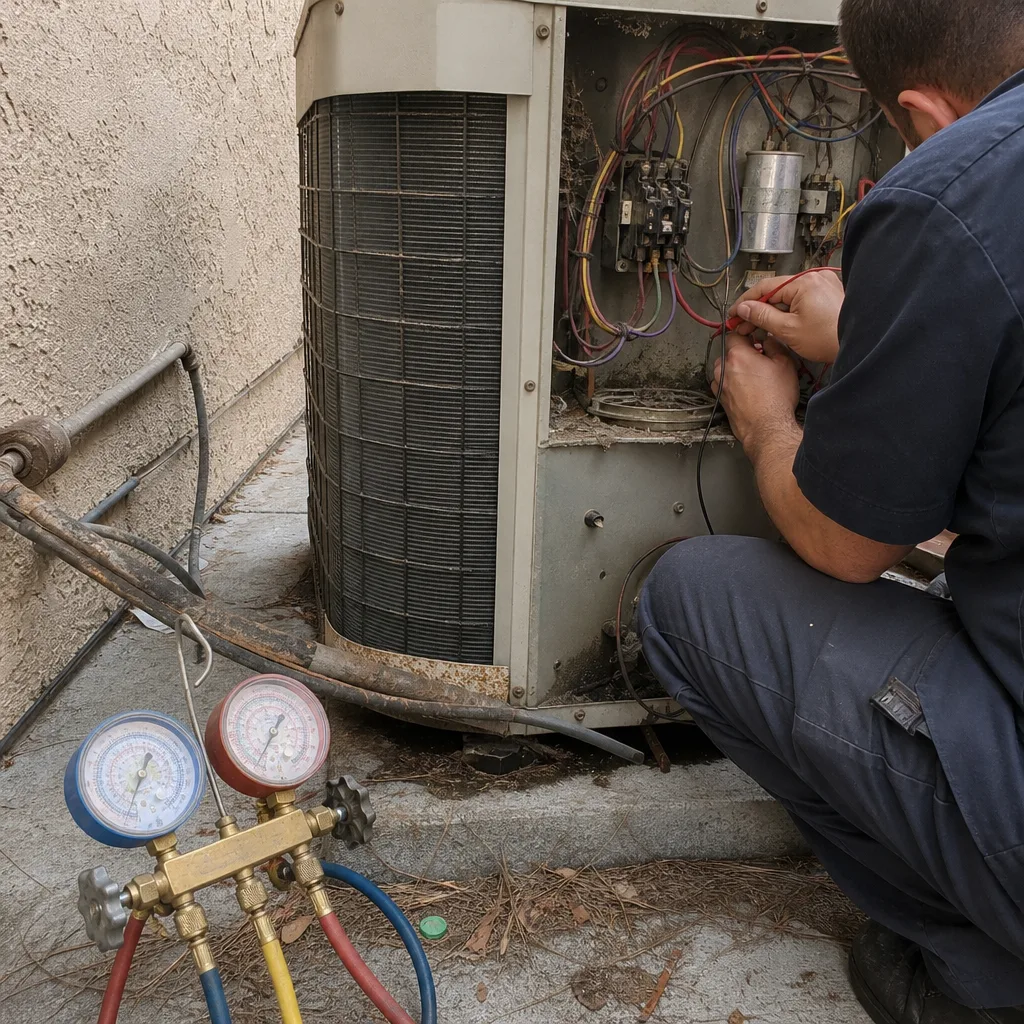
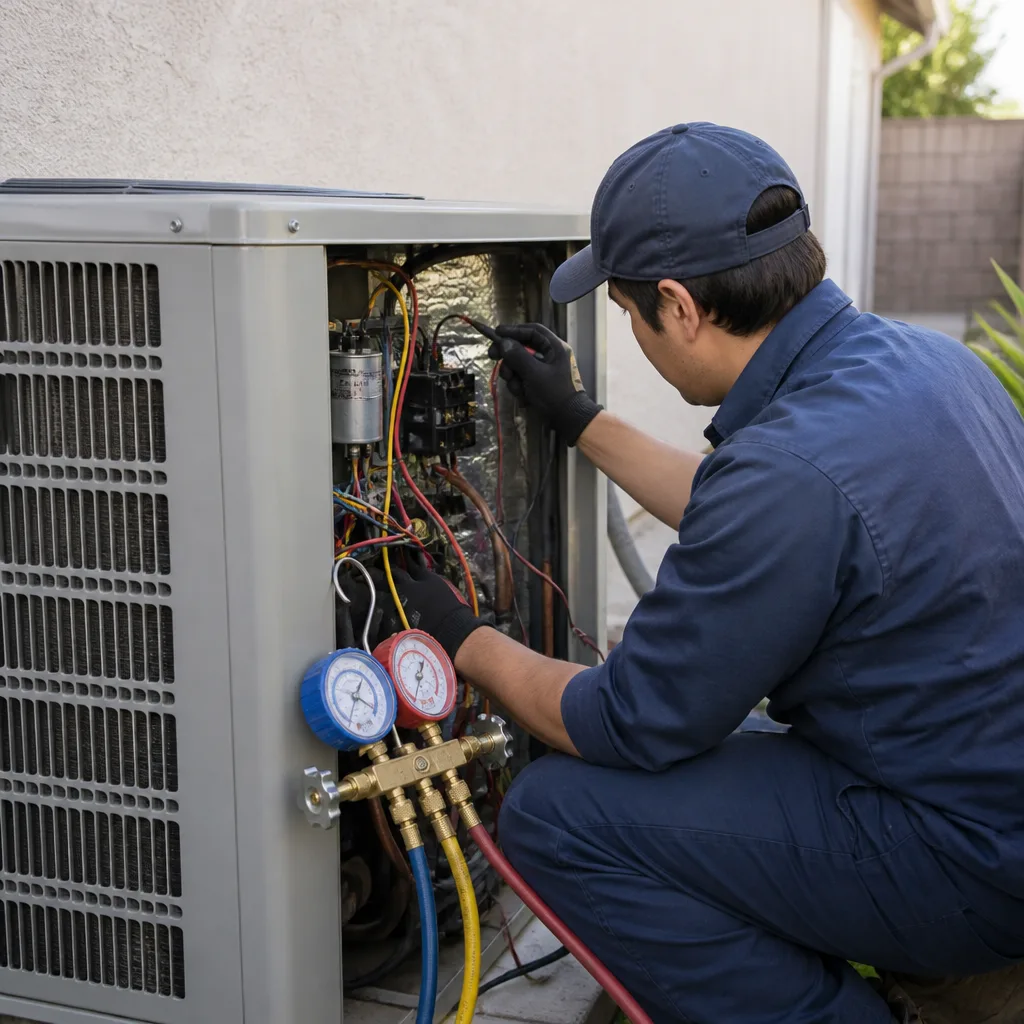
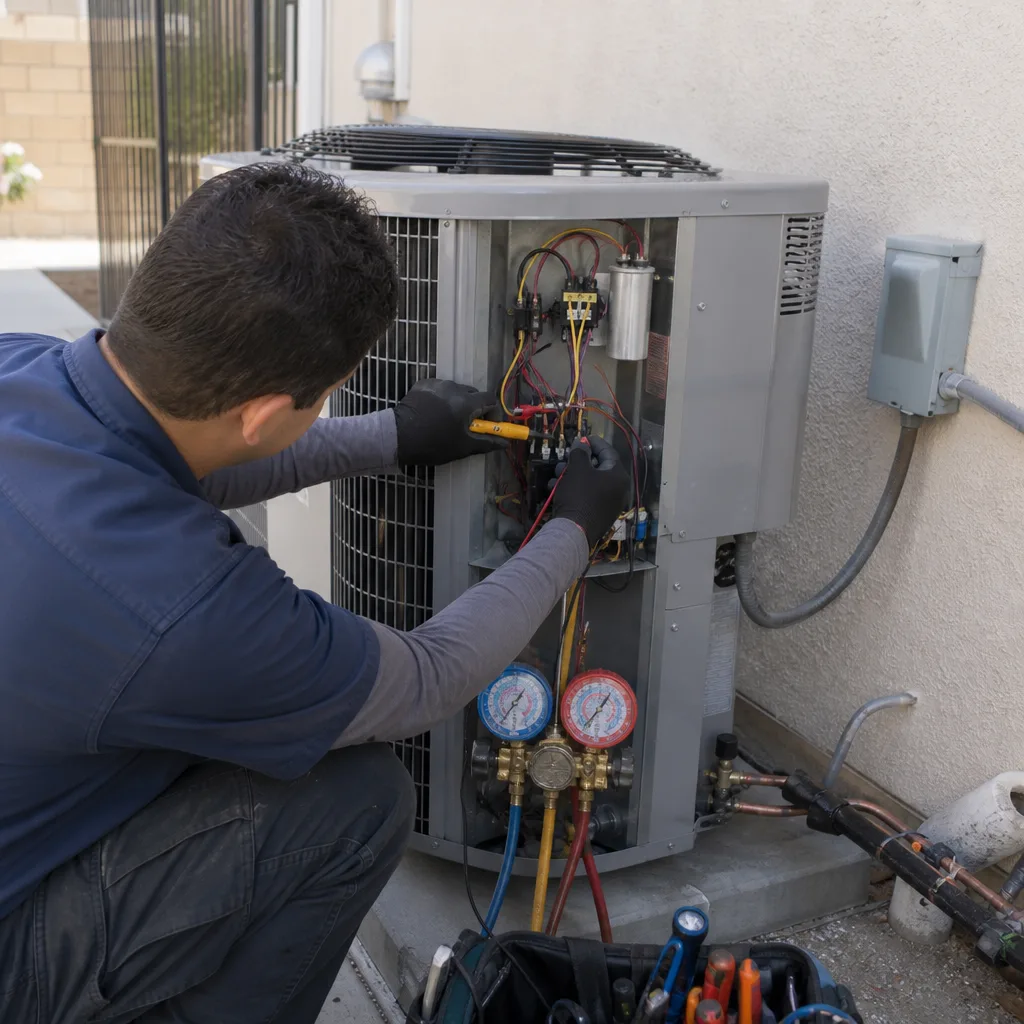
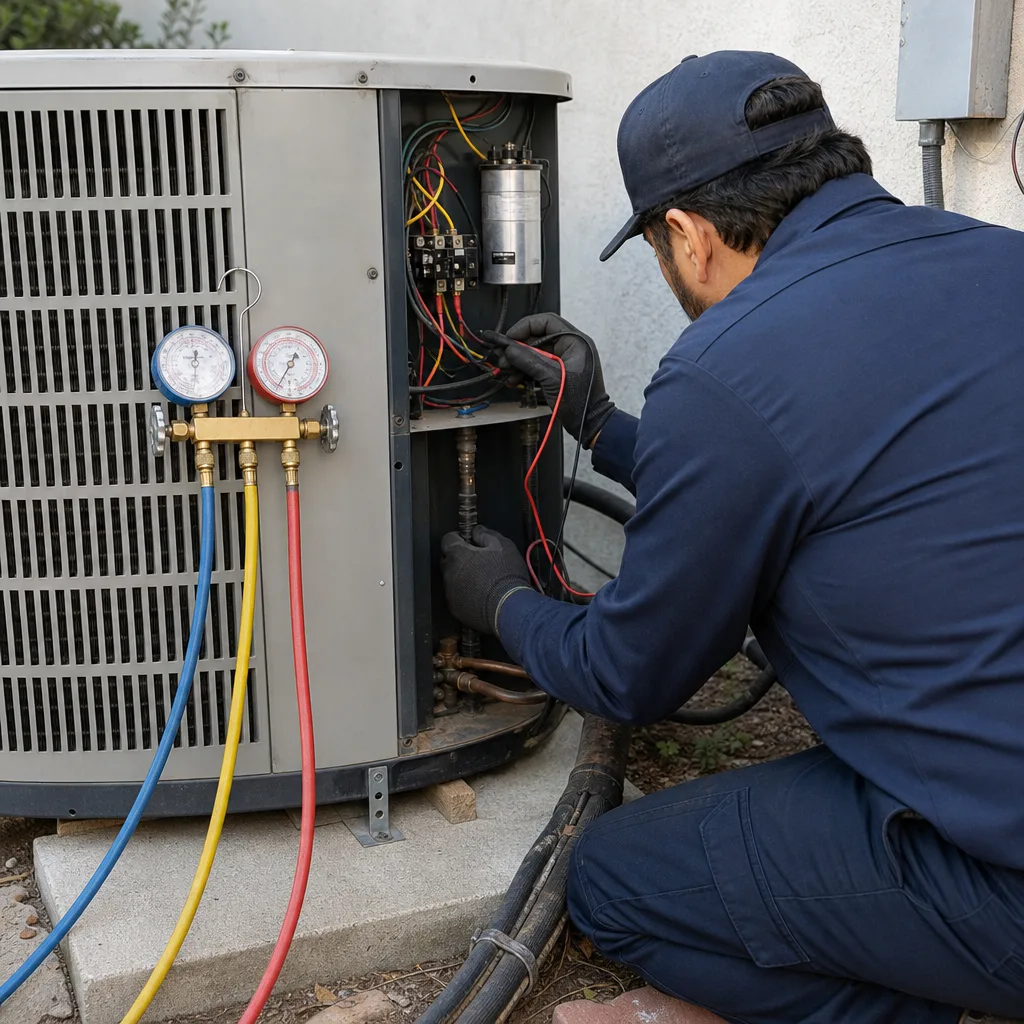
The capacitor is a small cylinder inside the condenser cabinet that stores and releases electrical charge to start the compressor and fan motor. When it weakens or fails outright, the system either won’t start or runs hot while it struggles. Carrier units are no different from any other brand in this respect, but there are some Carrier-specific fitment details worth knowing before anyone opens the cabinet.
Which Carrier Models This Applies To
Every Carrier split system and packaged unit built in the last thirty years uses at least one capacitor, and most use a dual-run capacitor, which means one cylinder shared by the compressor and the condenser fan. Common Long Beach service areas are full of these units: the Comfort Series (24ABC6, 24ACC6), Performance Series (24ACB7, 24APA7), Infinity Series (24ANB1, 24VNA9), and the older 38CKC and 38BRC builds that are still kicking in neighborhoods like Los Altos and El Dorado Park.
The Carrier-specific gotcha: Carrier stamps a capacitor value on the unit data plate that’s the bare minimum, not the beefed-up rating many replacement caps are built to. For example, a Carrier data plate might call for a 35/5 µF (microfarad) dual-run capacitor, but the factory-installed part in our experience is often a Titan HD or AmRad that tests at 40/5 µF with a 440-volt rating. You don’t downgrade the µF rating, and you don’t put a 370-volt cap in place of a 440-volt one. That swap works for about one Long Beach summer before it fails again. We match the actual installed spec, not just the minimum on the plate.
OEM versus aftermarket: Carrier OEM capacitors are made to spec but cost 30 – 60% more than a quality aftermarket unit from AmRad, Titan, or Genteq. The aftermarket units we install carry the same 440-volt rating and we guarantee them in writing for a full year. If OEM matters to you, we’ll quote it. In most homes, the money is better spent on the aftermarket part and the written guarantee.
Dalton Heating & Air Long Beach is an independent service provider. We’re not affiliated with Carrier, but our techs are factory-trained on Carrier systems and we stock Carrier-compatible capacitors on the truck for every model line above.
Styles & brands we work with
Signs Your Carrier Capacitor Replacement Is Failing
- The outdoor unit hums but won’t start. That’s the compressor and fan drawing current but not getting the voltage boot they need from a dead or dying capacitor. The unit will trip its breaker or overheat if this goes on too long.
- The fan isn’t spinning while the compressor runs. On a dual-run capacitor, the fan leg is usually the first to go. The compressor keeps churning and building head pressure while the fan sits still, which shortens the compressor’s life every minute it runs like that.
- The AC kicks on and off in short bursts. Short-cycling happens when the capacitor can’t hold a charge long enough to keep the motor running. Your thermostat does its job, but the outdoor unit can’t follow through.
- The top of the capacitor can looks swollen or split. Capacitors bulge at the top when they overheat internally. In Long Beach’s salt air near the coast, corrosion at the terminals accelerates this failure, sometimes as early as five or six years on original-equipment units.
- You’ve recently had a power blip or brownout. Southern California Edison voltage dips are hard on capacitors. A capacitor that was weak before the event often dies right after. If your AC worked before a rolling outage and doesn’t now, the capacitor is the first thing we check.
See the difference
 Before
 After
After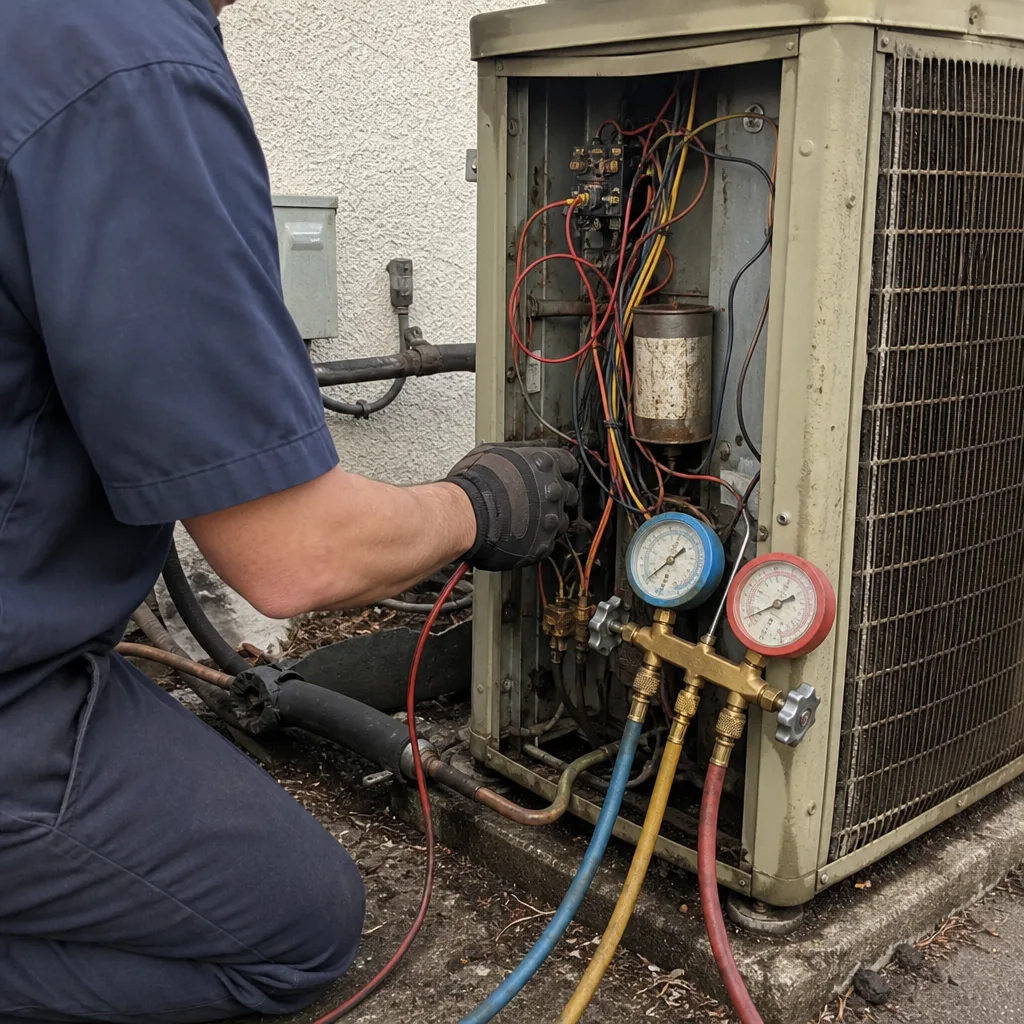 Before
 After
After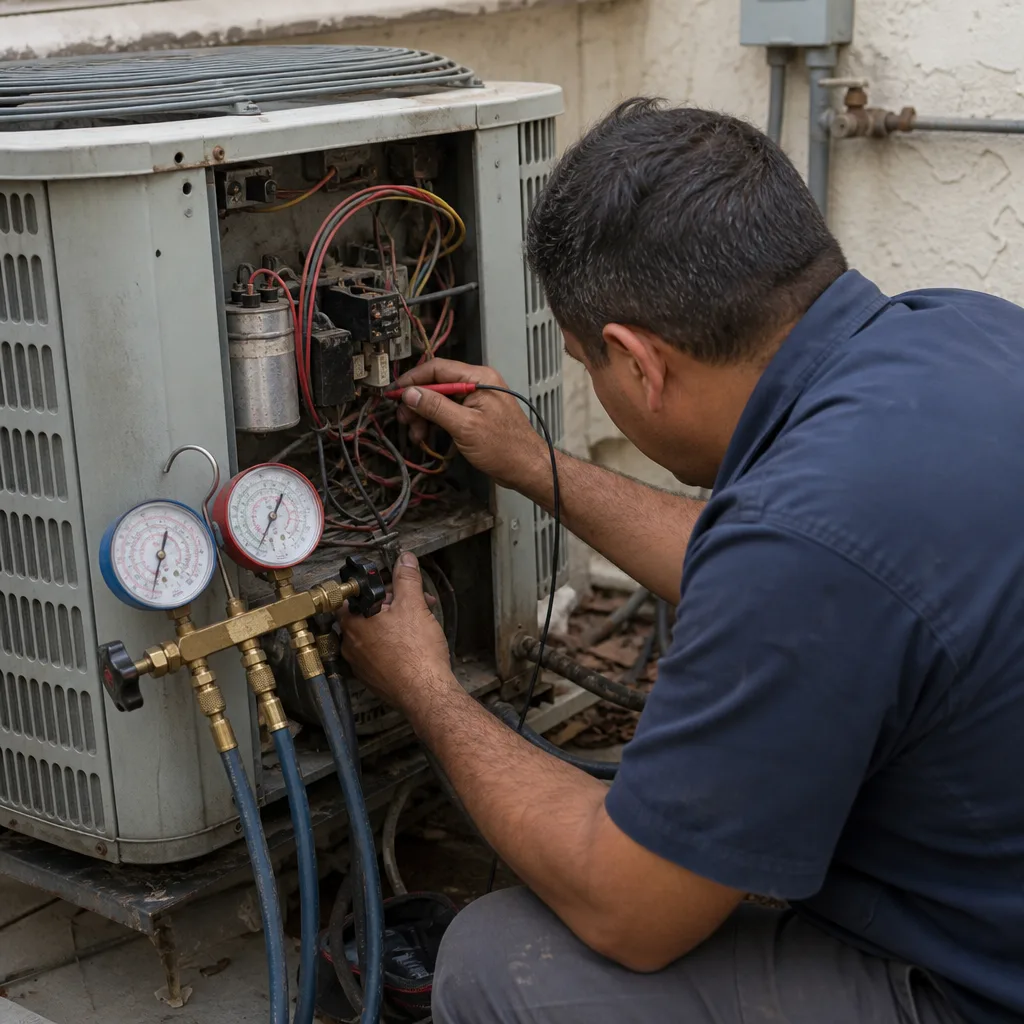 Before
 After
AfterReplacement Cost & What’s Included
In Long Beach, expect to pay $180 – $320 installed for a Carrier-compatible capacitor replacement. A single-run capacitor on an older unit sits at the low end; a dual-run capacitor with a 440-volt rating on a newer two-stage Carrier sits at the high end. The part itself is often under $60. The rest is the service call, the diagnosis, the swap, testing, and the written guarantee.
Here’s the breakdown on our pricing:
- Capacitor (single-run, 370V or 440V): $25 – $50
- Capacitor (dual-run, 440V): $35 – $65
- Labor and service call: $110 – $200
- Total installed range: $180 – $320
What’s included in that number: the part, the labor, testing before and after, and our 365-Day Done Right Promise, which means the repair is guaranteed in writing for a full year. If the capacitor fails in that time, we return at no charge. No asterisk, no prorating. The price you get is in writing before we touch anything, per The Garrison Standard. If we recommend the capacitor, that’s the price. If you also need a refrigerant recharge or a contactor because the capacitor failure baked something else, we’ll show you a written number for that too, and you decide.
DIY or Call Us?
This part is where we tell you honestly: a capacitor holds a charge even with the power off, and a wrong touch across those terminals can hurt you. Capacitors can discharge hundreds of volts into a hand or a tool. That’s not a scare line; that’s the reason we discharge them with a resistor before we do anything else on a condenser cabinet.
What you can safely check before calling: Is the breaker tripped? Is the thermostat calling for cool? Is the air filter clogged to the point of suffocating airflow? That’s it. Opening the condenser cabinet to test or remove the capacitor is where we ask you to let a tech with the right meter and training handle it. The part is inexpensive. The repair is fast. The risk of doing it wrong is not worth the savings.
If you’re in Long Beach and your Carrier unit is humming, short-cycling, or dead, call (562) 512-7423. We’ll put a real person on the phone, give you an arrival window, and quote the capacitor replacement in writing before any work starts.
FAQs
Eight to twelve years is the realistic range, but coastal Long Beach homes in Naples, Belmont Shore, and Bluff Park see corrosion-related failures closer to five or seven years on original parts. Heat, salt air, and SCE voltage dips all shorten the lifespan. We tell homeowners to expect one capacitor replacement in the life of a typical Carrier condenser.
No. A capacitor is a sealed, disposable component. Once it bulges, leaks, or tests below its rated microfarad range, it gets replaced, not repaired. There’s no rebuild for a residential capacitor. The replacement is quick, the part is inexpensive, and it’s covered by our full-year written guarantee.
Most Carrier capacitor replacements take 45 to 90 minutes from arrival to a running system. That includes diagnosis, discharge, removal, installing the correct replacement, testing start-up amperage, and confirming the fan and compressor are pulling within spec. You’re not giving up an afternoon.
Yes. Our Long Beach trucks carry single-run and dual-run capacitors in the most common Carrier specs: 35/5, 40/5, 45/5, 50/5, and 60/5 µF at 440 volts, plus 370-volt units for older models. We also keep a small stock of hard-start capacitors for compressors that have aged out of their original start-up range. If your Carrier needs a capacitor, there’s a very good chance we fix it in one visit. If it’s an unusual spec, we get it same day from a Long Beach supply house, not next week.
If your Carrier unit is acting up and you suspect the capacitor, call (562) 512-7423 for a free estimate. Tell us what the system is doing, and we’ll tell you exactly what it needs, in writing, before we touch anything.
Written by Marco Benitez, Owner, Dalton Heating & Air Long Beach at Dalton Heating & Air Long Beach, serving Long Beach and nearby areas.